Doggijuana

Mental Stimulation for Dogs: What Works and Why

· · 8 min read

15 minutes of real scent work settles most dogs faster than a 45-minute walk. Mental stimulation burns energy without the arousal spike that exercise creates — and you can do most of it at home.

A tired dog is a good dog — but "tired" doesn't have to mean five miles. Mental work drains dogs faster than physical exercise, and it does it without the arousal spike that a hard run creates. A dog that just sprinted for 45 minutes is physically depleted but still amped. A dog that spent 15 minutes on real scent work is genuinely settled.

The difference is how the two types of fatigue work. Physical exercise raises cortisol before lowering it. Mental engagement is effortful without the cortisol spike. Dogs that are mentally well-stimulated tend to be calmer between activity periods, less reactive, and easier to settle at night.

Scent work: the fastest mental drain for most dogs

A dog's nose has 300 million olfactory receptors compared to a human's six million. Processing scent information is cognitively expensive for dogs in a way it simply isn't for us. Fifteen minutes of legitimate nose work can tire a dog out the way an hour of walking doesn't.

The basics don't require any equipment. Hide a scented toy or a small amount of Juananip in a room. Let your dog locate it using scent alone. Start with easy hides (visible, nose height) and make them progressively harder as your dog gets the idea. The cognitive load of tracking the scent — not just finding the object — is where the mental work happens.

Juananip is especially effective for scent games because the matatabi compounds that make it work for cats also trigger a strong scent-driven response in dogs. Many dogs that ignore standard treat hides will track a Juananip toy with focused intensity. It's a useful tool for building nose-work interest in dogs that haven't taken to it yet.

Scent Work Foundation
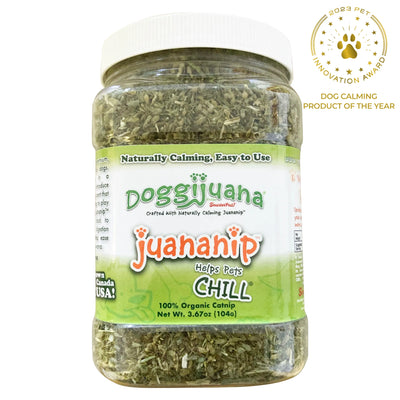
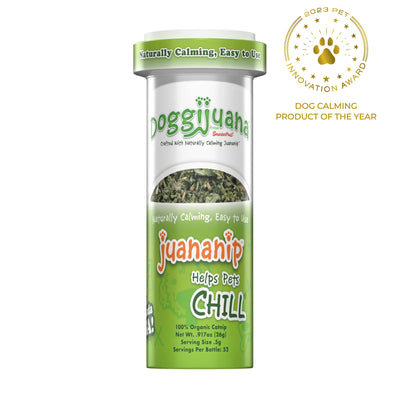
Tub container of Doggijuana® Juananip®, promoting a naturally calming effect for pets.
Juananip Refill Tub
$ 18.99
Slim container of Doggijuana® Juananip®, promoting a naturally calming effect for pets.
Juananip Refill Bottle
$ 9.99
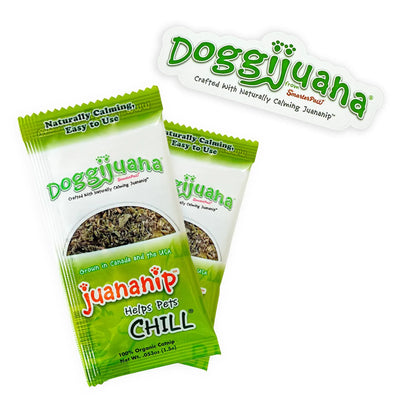
Two green packets of Doggijuana® Juananip® organic catnip with a logo sticker, promoting its calming benefits for pets.
Juananip Trial Pack
$ 0.99

Training games that count as mental stimulation

Learning a new cue requires a dog to pay sustained attention, make connections between behavior and consequence, and suppress competing impulses. A 10-15 minute training session at that level of engagement is genuine mental work — not just a trick practice.

The session structure that works: one primary behavior to introduce or refine, practiced in short repetitions with clear markers and rewards, followed by a jackpot finish. Keep it short enough that the dog is still eager when you stop. A session that runs too long produces a dog that's drilling mechanically, not actually thinking.

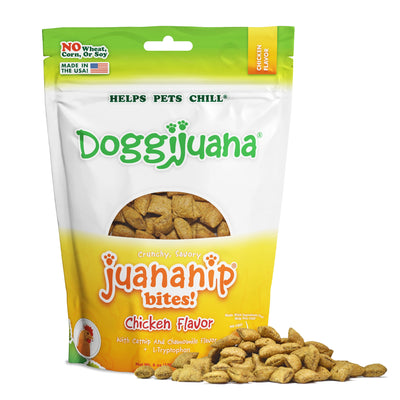
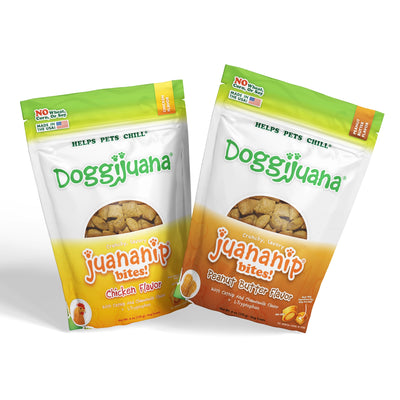
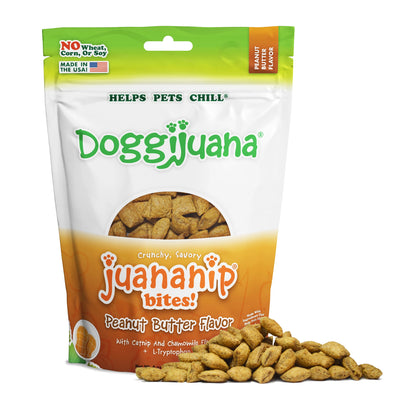
Juananip Bites are high-value treats — chicken and peanut butter flavors — that work well as training rewards for sessions where you need more engagement than a standard treat delivers. High-value rewards produce stronger behavior chains, especially for new or difficult cues.

Training Rewards
Enrichment Match

Which Enrichment Type Fits Your Dog?

3 questions. Get the approach most likely to actually work.

1 of 3 — What is your dog most motivated by?

2 of 3 — How does your dog typically act after a long walk?

3 of 3 — Has your dog tried puzzle toys or scent games before?

Chew play and the Tuffer Chewer

Chewing is a stress-relief and brain-engaging behavior that often gets underestimated as "just something dogs do." For dogs with strong chew drive, a quality chew session isn't idle time — it's active stress regulation.

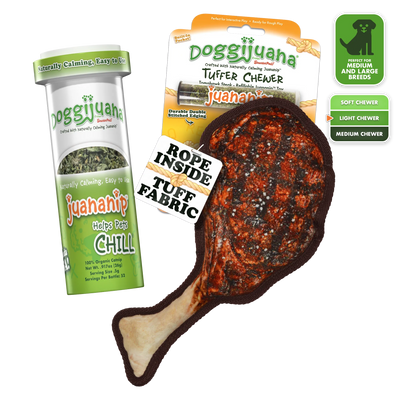
The Tuffer Chewer Game Day Duos pair a durable rubber chew toy with Juananip. The scent drives focused engagement from the start: the dog isn't just chewing to chew, it's working toward a scent reward that resets as the toy absorbs the Juananip. It's a format that keeps high-drive chewers occupied for significantly longer than a plain rubber toy.

Start with the Mini Game Day Duo if your dog is smaller or a lighter chewer. The full-size duos (Dill Pickle, Tomahawk Steak) are rated for dogs that destroy standard toys quickly.

Chew Play
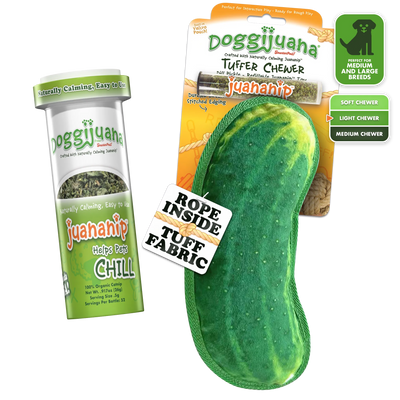
Durable pickle dog toy with a squeaker, refillable herb pocket, and calming effects. Perfect for medium chewers to play and relax.
Tuffer Chewer Doggi Duo Bundle - Dill Pickle & Juananip
$ 19.99
Tuffer Chewer Doggi Duo Bundle - Tomahawk Steak & Juananip
$ 19.99
Tuffer Chewer Mini Doggi Duo Bundle - Watermelon Slice & Juananip
$ 17.99

Puzzle feeders and slow feeding as enrichment

Eating from a flat bowl is zero mental work. A dog that inhales dinner in 45 seconds has missed an easy opportunity for cognitive engagement. Puzzle feeders, snuffle mats, and slow bowls extend the feeding time and require problem-solving — the dog has to figure out how to access the food, which activates the same scent-and-search sequence as nose work.

Loading a puzzle feeder with Juananip Bites instead of standard kibble raises the motivation level. A dog that attacks a puzzle feeder with Juananip Bites stays engaged for the full session instead of giving up when the problem gets hard.

The difficulty progression matters here too. A puzzle that's too easy finishes in 30 seconds. One that's too hard produces frustration, not engagement. Start simple and increase difficulty only once your dog is consistently solving at the current level.

Puzzle Feeders

Snack Slinger Breakfast Toast - Dog Treat Dispensing Toy
$ 15.99

Weekly Plan

A Mental Enrichment Week for Your Dog

Tap any day to see what to do and which Doggijuana products support it.

Easy hide-and-find (10-15 min)Hide a Juananip toy or refill bottle in one room. Let your dog locate it by scent alone. Start at nose height — easy wins build the habit.
Training session (10 min)One new cue or reinforce a known one. Use Juananip Bites as the reward for high motivation.
Tuffer Chewer session (15-20 min)Set up the Tuffer Chewer with Juananip. Scent drives focus from the start — let the dog work it independently.
Puzzle feeder at mealtimeSwap the food bowl for a puzzle feeder or snuffle mat. Load with Juananip Bites mixed in for extra motivation.
Two short training sessions (10 min each)Morning and evening. Same cue in both sessions — repetition with a 6+ hour gap consolidates learning faster than repeated practice in one block.
Harder scent hideMove the Juananip toy to a different room or a less obvious spot than Monday. Progress the difficulty weekly.
Puzzle toy session (15-20 min)Use a different puzzle than Tuesday if you have one. Variety across the week keeps the dog engaged in the format rather than just memorizing the solution.
Chew breakSecond Tuffer Chewer session of the week. Alternate the scent — try a different Juananip variety if available.
New environment walk or outingA different park, trail, or pet-friendly store. Novel environments require continuous scent and visual processing — it's passive mental work that compounds with the week's active enrichment.
Training reviewRun through the week's practiced cues in a new location. Location-proofing a behavior is a level up in difficulty — it counts as new learning.
One enrichment activity of your choicePick whatever went best this week and repeat it. Or try something you didn't get to. Weekends are lower-structure on purpose — the habit is built across the weekdays.
Rest is part of the planDogs need recovery time after cognitively demanding weeks. If your dog is noticeably calm and settled, that's the plan working — don't fill the space with more stimulation.

Week 2: make the scent hides harder, add one new training cue, and increase puzzle difficulty by one level. Enrichment that stays at the same difficulty stops being enrichment.

Putting it together: what a good mental stimulation week looks like

Mental enrichment doesn't need to fill every hour. Consistency matters more than volume. The dogs that benefit most from a structured approach get regular, predictable enrichment rather than occasional marathon sessions.

A practical baseline for most dogs:

Daily: One 10-15 minute training session and one scent game or puzzle feeder session. These don't need to happen simultaneously — morning training, evening puzzle feeding works well.

Several times a week: Tuffer Chewer sessions for dogs with high chew drive. Nose work progression (harder hides, new rooms, eventually outdoor sniff work).

Weekly: One novel environment experience. A new walking route, a different park, a pet-friendly store. Novel environments require a dog to process new scent and visual information continuously — it's cognitively demanding in a way the usual routine isn't.

The right mental setup depends on what drives your dog. Scent-motivated dogs go deep on nose work and Juananip games. Food-motivated dogs thrive on puzzle feeders and training. High-drive dogs need both. The starting point is identifying which kind of engagement actually lights your dog up — and then building more of that into the week.

Frequently asked questions

What counts as mental stimulation for dogs? +
Any activity that requires a dog to actively think, make decisions, or use its senses in a focused way. Scent work and nose games are the most cognitively demanding. Training sessions — especially learning new cues — require sustained attention and impulse control. Puzzle feeders and treat dispensers require problem-solving. Chewing can also be mentally engaging for dogs with high chew drive, especially with scent-driven enrichment like Juananip.
How much mental stimulation does a dog need per day? +
Most dogs benefit from at least 15-30 minutes of deliberate mental enrichment per day, separate from physical exercise. This can be broken into shorter sessions — a 10-minute training session in the morning and a 10-minute scent game in the evening covers the baseline for most dogs. High-drive or working breeds typically need more.
Does mental stimulation tire dogs out more than exercise? +
For many dogs, yes. Mental work produces genuine cognitive fatigue without the arousal spike that hard physical exercise creates. A dog that just ran for 45 minutes may still be amped and restless. A dog that spent 15-20 minutes on focused scent work or training often settles into calm faster. The best approach combines both, but if you're short on time, mental enrichment tends to produce more settled behavior than a quick physical outlet.
What is scent work for dogs? +
Scent work is any nose-focused activity where the dog uses smell to locate a target. It can be as simple as hiding a Juananip toy in a room and letting the dog find it, or as structured as formal nosework training with specific target odors. Dogs have roughly 300 million olfactory receptors compared to a human's 6 million — processing scent is cognitively demanding for them in a way it isn't for us, which is why even basic scent games produce significant mental fatigue.
Can Juananip be used for mental enrichment? +
Yes. Juananip contains matatabi (Japanese catnip) compounds that trigger a strong scent-driven response in many dogs, making it useful for nose games and scent enrichment. Juananip Bites also work well as high-value training treats, producing stronger behavioral responses than standard rewards. The Tuffer Chewer toys use Juananip scent to drive focused chew engagement.
How do I start mental enrichment if my dog isn't used to it? +
Start easy. For scent work, make the first few hides visible at nose height — the dog needs to learn that sniffing equals reward before you make the game hard. For puzzle feeders, set the difficulty to easiest so the dog gets immediate success. For training, pick one simple behavior and repeat it in short sessions with high-value rewards. The goal in the first week is to build the habit of engagement, not to challenge the dog.

The SmarterPaw Team

We're the team behind Doggijuana — found in 7,000+ retailers worldwide including PetSmart, Petco, and Walmart. Founded in 2015 in Lenexa, Kansas.

Share
← Back to Doggijuana Blogs & News

Leave a comment

Please note, comments need to be approved before they are published.