


Discover the differences between valerian root and catnip for cats. Learn their effects, benefits, and how to choose the best option for your feline friend.
What Are Valerian Root and Catnip?
Valerian root and catnip are two natural herbs that have gained popularity among cat owners for their unique effects on feline behavior. Valerian root comes from the valerian plant (Valeriana officinalis), a perennial herb native to Europe and parts of Asia. It has been used for centuries in human herbal medicine as a natural remedy for insomnia, anxiety, and stress. For cats, valerian root is known for its stimulating and calming properties, making it a versatile option for addressing various feline behavioral needs.
Catnip, on the other hand, is derived from the Nepeta cataria plant, a member of the mint family. Native to Europe, Asia, and Africa, catnip has become a household name among pet owners for its ability to elicit playful and euphoric reactions in cats. The active compound in catnip, nepetalactone, is responsible for its unique effects on feline behavior. Catnip is often used in toys, sprays, and dried forms to entertain and engage cats.
Both valerian root and catnip are prized for their natural properties and their ability to enhance a cat's quality of life. While they share some similarities, their effects and applications differ, making it important for cat owners to understand which herb might be better suited for their furry friend.
How Do Valerian Root and Catnip Affect Cats?
Valerian root and catnip interact with a cat's body in distinct ways, leading to different behavioral and physiological responses. Valerian root contains a compound called actinidine, which acts as a stimulant for most cats. When exposed to valerian root, many cats exhibit increased energy, playful behavior, and heightened curiosity. Interestingly, after the initial stimulation, valerian root often has a calming effect, helping to reduce stress and anxiety. This dual action makes it a unique option for cats that need both stimulation and relaxation.
Catnip, on the other hand, works through its active compound, nepetalactone. When cats smell catnip, nepetalactone binds to receptors in their nasal tissue, triggering a response in the brain's amygdala and hypothalamus. This results in a temporary state of euphoria, often accompanied by rolling, purring, rubbing, and playful antics. Unlike valerian root, catnip's effects are primarily stimulating and tend to wear off after about 10-15 minutes, followed by a refractory period during which the cat becomes temporarily immune to its effects.
While both herbs can stimulate cats, valerian root's calming properties set it apart. Additionally, not all cats respond to catnip—approximately 30-50% of cats lack the genetic sensitivity to nepetalactone. In contrast, valerian root tends to have a broader appeal, with a higher percentage of cats reacting to it. Understanding these differences can help cat owners choose the right herb for their pet's needs.
Benefits of Valerian Root for Cats
Valerian root offers several benefits for cats, making it a valuable tool for pet owners. One of its primary advantages is its ability to relieve stress and anxiety. Cats that are prone to nervousness, whether due to environmental changes, travel, or loud noises, can benefit from valerian root's calming effects. It can help soothe a cat's nerves and promote relaxation, making it an excellent option for stressful situations like vet visits or thunderstorms.
In addition to its calming properties, valerian root is also a natural stimulant. This makes it particularly useful for cats that are lethargic or uninterested in play. By encouraging activity and engagement, valerian root can help combat boredom and promote physical exercise, which is essential for a cat's overall health.
Valerian root can also be used as a training aid or for behavioral modification. For example, it can be introduced as a positive reinforcement tool to redirect a cat's attention away from undesirable behaviors, such as scratching furniture. Its versatility and dual-action effects make valerian root a well-rounded option for addressing a variety of feline needs.
Benefits of Catnip for Cats
Catnip is a classic favorite among cats and their owners, thanks to its ability to spark joy and playfulness. One of its most notable benefits is its capacity to encourage physical activity. Cats exposed to catnip often engage in energetic behaviors like chasing, pouncing, and rolling, which can help them burn off excess energy and maintain a healthy weight.
In addition to promoting exercise, catnip provides mental stimulation. The euphoric state it induces can help alleviate boredom, especially for indoor cats that may lack opportunities for exploration and play. Catnip can also be a great way to strengthen the bond between a cat and its owner, as interactive play sessions with catnip toys can be both entertaining and enriching.
Catnip's versatility extends to its various forms, including dried leaves, sprays, and infused toys. This makes it easy for pet owners to incorporate catnip into their cat's routine in a way that suits their preferences. While its effects are temporary, catnip remains a go-to option for providing cats with moments of joy and excitement.
Key Differences Between Valerian Root and Catnip
While valerian root and catnip share some similarities, their differences are key to understanding which herb might be better for your cat. One major distinction lies in their effects. Valerian root offers both stimulation and calming properties, making it a more versatile option for cats that need relaxation as well as activity. Catnip, on the other hand, is primarily stimulating and does not have the same calming aftereffects.
The duration of impact also varies. Catnip's effects typically last 10-15 minutes, after which cats enter a refractory period. Valerian root, however, can have longer-lasting effects, particularly its calming properties, which may persist for hours. This makes valerian root a better choice for situations that require prolonged stress relief.
In terms of availability and preparation, both herbs are widely accessible, but they come in different forms. Catnip is commonly found in dried form, sprays, and toys, while valerian root is often available as dried root pieces, powders, or infused in toys. The choice between the two may also depend on a cat's individual response, as not all cats react to catnip, while valerian root tends to have a broader appeal.
How to Choose the Right Option for Your Cat
Choosing between valerian root and catnip depends on your cat's personality, preferences, and specific needs. If your cat is highly active and enjoys bursts of play, catnip may be the better option. Its stimulating effects can provide the excitement and engagement your cat craves. On the other hand, if your cat is prone to stress or anxiety, valerian root's calming properties may be more beneficial.
Experimenting with both herbs is a good way to determine your cat's preferences. Introduce each herb separately and observe your cat's reactions. Some cats may respond strongly to one and show little interest in the other, while others may enjoy both. Keep in mind that individual responses can vary, so it's important to tailor your choice to your cat's unique needs.
Our calming blends with valerian — particularly Kalico Kush (97.7% catnip + 2.3% valerian) — are designed for the dual stimulation-then-relaxation profile that valerian creates. They're a low-risk way to introduce valerian to a cat that's already familiar with catnip.
Are Valerian Root and Catnip Safe for Cats?
Both valerian root and catnip are generally safe for cats when used appropriately. However, moderation is key to avoiding potential side effects. Overexposure to catnip can lead to mild digestive upset or temporary lethargy, while excessive use of valerian root may cause overstimulation or drowsiness.
To ensure safe usage, limit your cat's exposure to these herbs to a few times a week. For valerian root, start with small amounts to gauge your cat's reaction, and avoid giving it to pregnant or nursing cats without consulting a veterinarian. Similarly, monitor your cat's response to catnip and provide it in controlled doses to prevent overindulgence.
How much valerian root is safe for your cat?
The general dosing guidance for valerian root with cats sits well below what you might use with humans. The bitter, distinctive aroma is potent enough that small amounts trigger the response — you don't need much.
For dried valerian root in a calming catnip blend (the form you'll find in our blends), the practical ceiling is around 2–3% by weight. Our blends with valerian stay at or below that:
- Kalico Kush — 97.7% Canadian catnip + 2.3% valerian root. The valerian-forward blend in our lineup.
- Garden Pawty — multi-herb blend including 0.8% valerian alongside dill and parsley.
- Original Pawty Mix — 0.9% valerian as part of a six-herb multi-blend with silvervine, chamomile, and others.
A 1/8-cup serving of any of these works out to less than a pinch of actual valerian — enough to trigger the response without overstimulating.
For loose dried valerian root by itself, a small pinch sprinkled on a toy or kicker pillow is plenty. A pinch a few times per week is the upper bound — daily exposure isn't necessary and can dull the response over time in sensitive cats.
What "too much" looks like: more than 5% concentration in a blend can cause overstimulation, and liquid extracts or tinctures (the human supplement form) aren't appropriate for cats — the alcohol carrier and concentration aren't formulated for feline metabolism. If your cat seems unusually agitated, restless, or has GI upset after valerian exposure, reduce the amount or pause for a few days. Adverse reactions are rare but possible, especially in very young or senior cats.
Calming catnip blends with valerian root

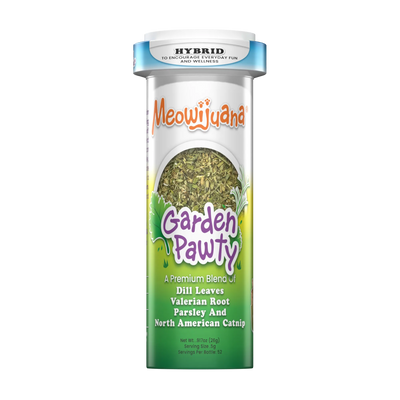

You can also browse the full lineup of calming, stimulating, and hybrid blends to see which fits your cat's profile.
Alternative Herbs and Plants for Cats
If your cat doesn't respond to valerian root or catnip, there are other feline-friendly herbs to consider. Silver vine, a plant native to Asia, contains compounds that elicit reactions similar to catnip but appeal to a broader range of cats. Honeysuckle wood is another alternative that can stimulate playful behavior in cats that are unresponsive to catnip.
These alternatives can provide additional options for enriching your cat's environment and addressing their behavioral needs. Like valerian root and catnip, they should be introduced gradually to ensure your cat's safety and enjoyment. If you want to go deep on silvervine specifically, the silvervine sticks guide covers what to expect and which cats respond.
Final Thoughts: Valerian Root vs Catnip
Valerian root and catnip each offer unique benefits for cats, making them valuable tools for enhancing your pet's well-being. While catnip is ideal for stimulating play and reducing boredom, valerian root's dual-action effects make it a versatile option for both relaxation and activity. Ultimately, the best choice depends on your cat's individual preferences and needs. By experimenting with both herbs and observing your cat's reactions, you can find the perfect way to keep your feline friend happy and healthy.


