


How Much Play Do Cats Need?
Most cat owners underestimate how much play their indoor cat needs. Here's exactly how much daily playtime cats need by age — and how to build a routine that sticks.
Read more →

🇺🇸 North American Grown • Non-Toxic • Award-Winning Since 2017
Shop Catnip →Catnip is one of the most fascinating plants in the natural world — a humble member of the mint family that triggers a profound neurological response in roughly half of all domestic cats. But what exactly is it, how does it work, and is it safe?
This guide covers everything: the science behind the catnip response, safety, how long it lasts, the difference between catnip and silvervine, and which form is right for your cat.
The Basics
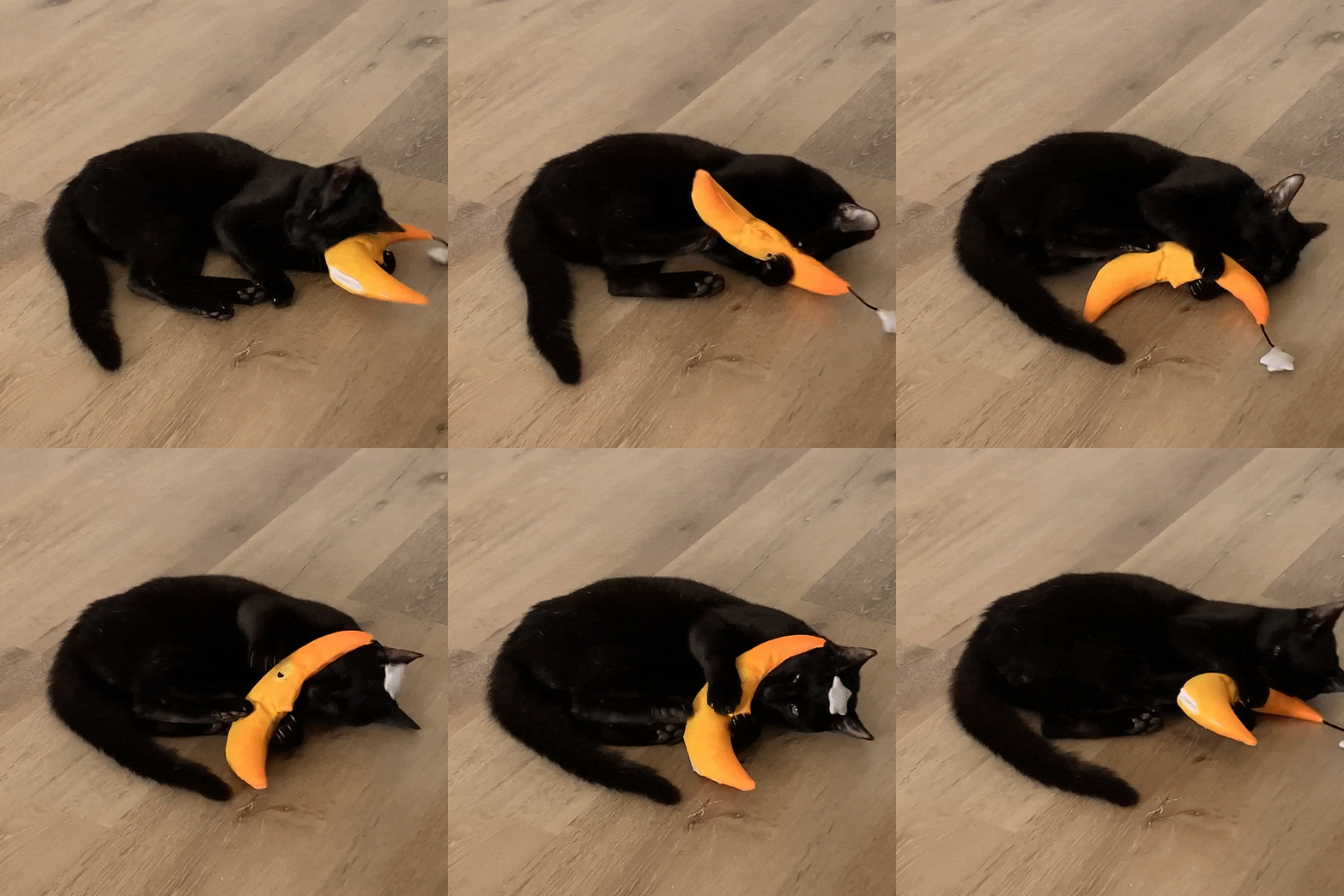
Catnip (Nepeta cataria) is a perennial herb in the mint family, native to Europe and Asia but now grown across North America. The plant itself is unremarkable — a weedy, grey-green shrub that smells faintly herbal to humans. But hidden in microscopic bulbs on its leaves and stems is a compound called nepetalactone, and to roughly 60–70% of domestic cats, it is profoundly intoxicating.
Nepetalactone is a bicyclic monoterpenoid — a small, volatile organic molecule that evaporates quickly at room temperature, which is why crushed or bruised catnip smells stronger than intact leaves. When a cat sniffs catnip, nepetalactone binds to receptors in the nasal tissue and triggers a cascade of activity in the olfactory bulb and hypothalamus — the brain regions governing mood, pleasure, and sexual behavior.
The behavioral response — rolling, rubbing, vocalizing, drooling, and apparent euphoria — closely mimics a female cat in heat, which led early researchers to classify nepetalactone as a pheromone mimic. More recent work suggests it's more accurately described as a superstimulus: it doesn't replicate any single natural compound, but instead triggers the same neural pathways at a much higher intensity than anything cats encounter in nature.
The response is entirely olfactory. Eating catnip produces a mild sedative effect — almost the opposite reaction — because nepetalactone is metabolized differently when ingested. The classic catnip "high" only happens through smell. It lasts around 5–15 minutes, after which a refractory period of 30 minutes or more sets in, during which the cat becomes temporarily immune to catnip's effects. The brain simply stops responding until nepetalactone clears the receptors.
The Science
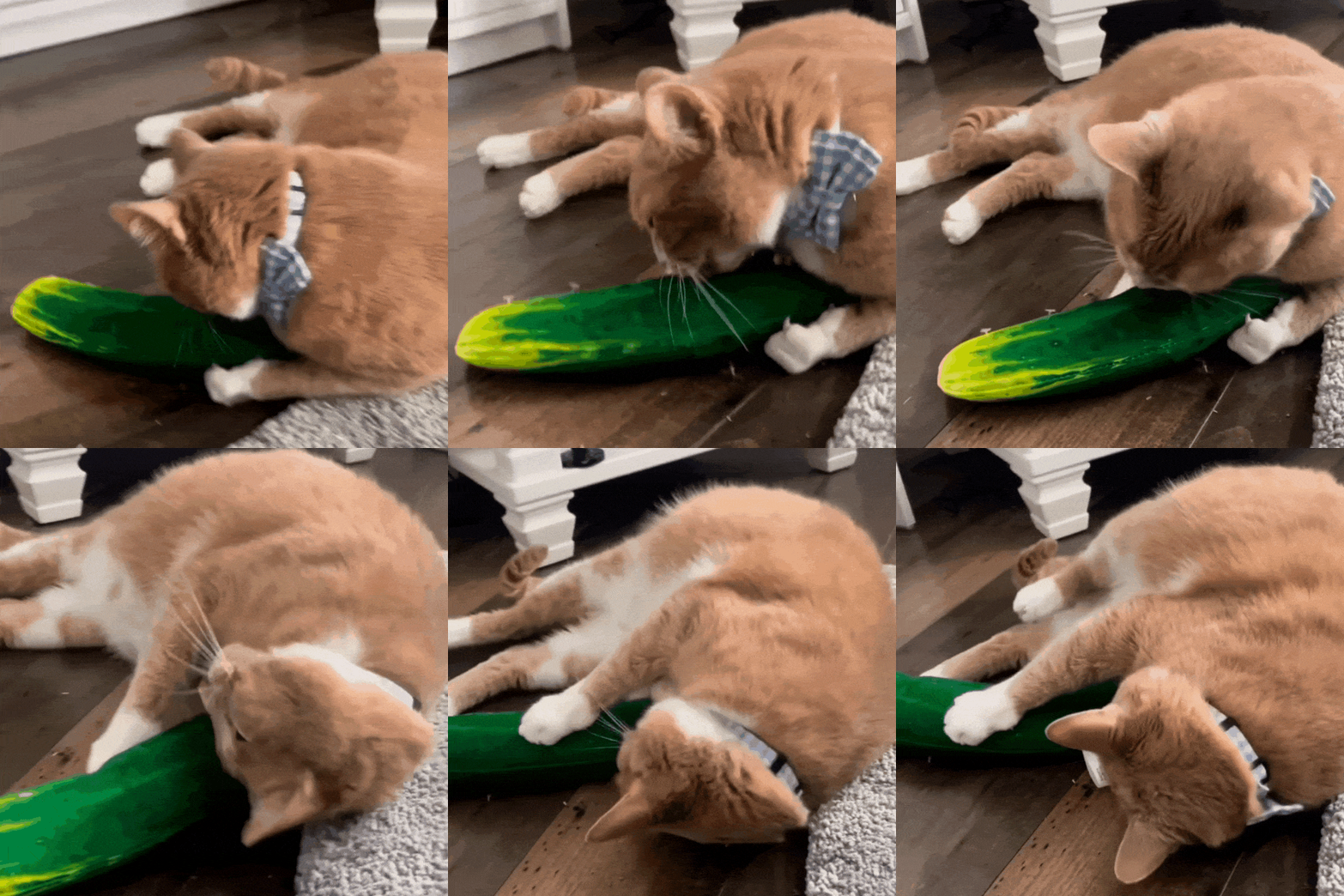
Sensitivity to catnip is hereditary, controlled by an autosomal dominant gene. A cat needs only one copy of the relevant allele to respond — but roughly 30–40% of cats are born without it entirely and will show zero interest no matter how much catnip you wave in their face. Kittens under 6 months old typically don't respond either, as the sensitivity appears to develop with sexual maturity.
Big cats are not exempt. Lions, tigers, leopards, and jaguars all show catnip responses at similar rates to domestic cats. Interestingly, nepetalactone has also been found to repel insects — particularly mosquitoes and aphids — leading some researchers to speculate that the cat response evolved as a way for cats to spread the compound across their fur as a natural insect deterrent, not just for recreation.
Catnip isn't the only plant that affects cats this way. Silvervine (Actinidia polygama), common in East Asian mountainous regions, produces two active compounds — actinidine and dihydroactinidiolide — and triggers a response in a broader range of cats than catnip, including many that don't respond to nepetalactone. Studies suggest up to 80% of cats respond to silvervine, making it particularly useful for cats that catnip leaves cold.
Valerian root (Valeriana officinalis) contains actinidine as well, producing a similar but generally mellower effect — more sedative than euphoric. Honeysuckle (Lonicera tatarica) wood shavings affect some cats through a different mechanism entirely, likely through a compound called neomatatabiol. And cat thyme (Teucrium marum), despite the name, is a completely different plant from regular thyme — it's a member of the germander family and produces a strong rolling-and-rubbing response through compounds that aren't yet fully characterized.
The practical upshot: if your cat doesn't respond to catnip, they're not broken — they're just missing one gene. Try silvervine first. It works on most of the holdouts.
Is It Safe?
Duration & Storage
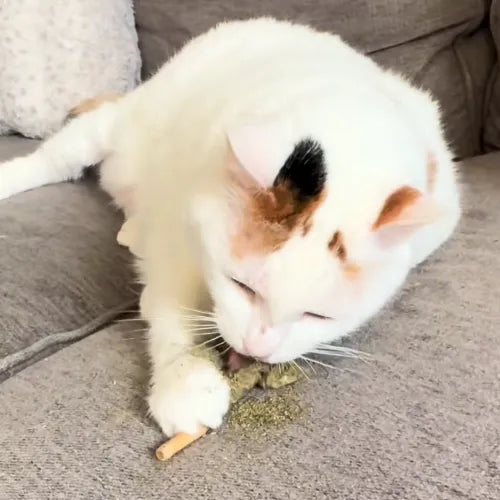
Types & Forms
Catnip comes in many forms, each with a different intensity, convenience, and best use. The quality and origin of the herb significantly affects potency.

The most potent form. Sprinkle on toys, scratching posts, or play areas. Best for cats who love to roll and rub.
Highest potency
Pre-filled toys for convenience. Refillable toys are best — replenish with fresh catnip as potency fades.
Great for play
Liquid spray applied to toys, beds, or scratching posts. Convenient for refreshing old toys or introducing cats to new furniture.
Easy application
Edible treats infused with catnip. Produces a calmer, more sedative effect than inhalation. Good for anxious cats.
Calm & mellow
From the Actinidia polygama vine. Works on ~80% of cats — including many non-catnip reactors. Often produces a stronger response.
Alternative herb
Multi-herb blends combining catnip with silvervine, valerian, honeysuckle, or botanicals for broader appeal and varied intensity.
Broad appealFind Your Match
Answer 5 quick questions and we'll match your cat with the perfect product.
Your Match
Your cat is an active, engaged reactor who'll get the most out of loose dried catnip. It's the most potent form — sprinkle it on toys, scratching posts, or directly on the floor for a full-body roll. Meowijuana's North American-grown loose catnip is harvested at peak nepetalactone content for maximum intensity.
Your Match
Your cat doesn't respond strongly to catnip — or you want something more intense. Silvervine is the answer. It works on around 80% of cats, including many who ignore catnip entirely, and typically produces a stronger and longer-lasting response. Try Meowijuana's silvervine sticks or a silvervine-catnip blend.
Your Match
You want the benefits of catnip without the mess of loose herb — spray is your solution. Apply it to toys, bedding, or scratching posts to refresh them instantly. Great for cats who love to bat and pounce rather than roll. Meowijuana's spray uses real catnip extract, not artificial fragrance.
Your Match
Your cat is a moderate reactor who'd benefit from a broader herb profile. A blend of catnip and silvervine covers more neurological bases — cats who are lukewarm on straight catnip often go wild for a blend. Meowijuana's blends are calibrated for cats who need a little extra to get going.
Your Match
Your cat is older, anxious, or more food-motivated than play-motivated. Catnip treats deliver the herb through ingestion rather than inhalation, producing a gentler, more calming effect — perfect for cats who need to mellow out rather than go wild. Great for vet visits, travel, or multi-cat households.
Your Match
Your cat is a hunter at heart — they want something to stalk, grab, and kick. A catnip-filled toy gives them a target for all that energy. Go for a refillable toy so you can replenish the herb as potency fades. Meowijuana's toys are designed to withstand serious bunny-kicking.


From the Blog
How Much Play Do Cats Need?
Most cat owners underestimate how much play their indoor cat needs. Here's exactly how much daily playtime cats need by age — and how to build a routine that sticks.
Read more →The Complete Indoor Cat Enrichment Guide
Most indoor cats aren't getting what they actually need — and their behavior shows it. Here's the complete framework for creating an environment where your cat can truly thrive.
Read more →Found in 7,000+ retailers worldwide


