


Somewhere between the needle-tooth phase and the day the chair leg loses, every puppy owner asks the same two questions: is this normal, and when does it end? Good news on both: puppy teething runs on a surprisingly predictable schedule, the destruction peak has an actual end date, and the whole stretch goes far easier when the mouth has legal work to do. Here's the timeline, the warning signs worth knowing, and the toolkit.
The teething timeline
3 to 6 weeks: the needle set arrives. Puppies cut their 28 baby teeth before most owners ever meet them, which is why an eight-week-old arrives fully armed. Those first teeth are famously sharp; they're also temporary.
Roughly 12 to 16 weeks: the swap begins. The baby teeth start loosening and falling out as the adult set pushes through, usually starting at the front. You might find a tiny tooth in the carpet or a toy; more often you won't, because puppies typically swallow them, and that's harmless. A little blood-spotting on toys during this stretch is normal too.
3 to 6 months: the gnaw peak. This is the stretch the furniture remembers. Sore gums demand pressure, everything in reach becomes a candidate, and the chewing urge is at its lifetime maximum. It's not disobedience, it's dentistry: the mouth needs work, and your job is deciding where the work happens.
Around 6 to 7 months: the adult set lands. All 42 adult teeth are typically in, the acute soreness ends, and the frantic chew-everything phase tapers into a normal adult chew habit, which never goes to zero and shouldn't: chewing stays a lifelong outlet.
What's normal and what's a vet visit
Normal: enthusiastic gnawing, drooling, minor blood spots on toys, missing baby teeth you never find, a few days of picky eating when the mouth is extra sore. Worth a vet look: a double row of teeth (a baby tooth that didn't fall out as the adult tooth came in, called a retained tooth, which is fixable but shouldn't be ignored), real bleeding rather than spotting, a broken tooth, or a puppy who stops eating altogether. One standing caution on gear: very hard chews (antlers, bones, hard nylon) can crack teeth, in puppies and adults alike; soft-to-medium resistance is the teething lane.
The chew toolkit
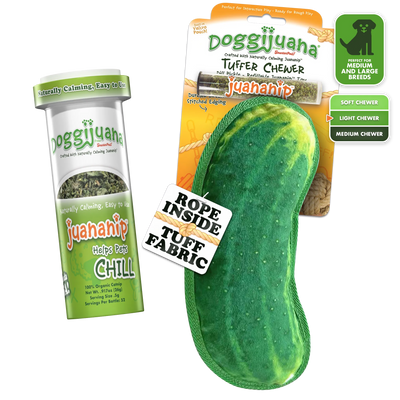
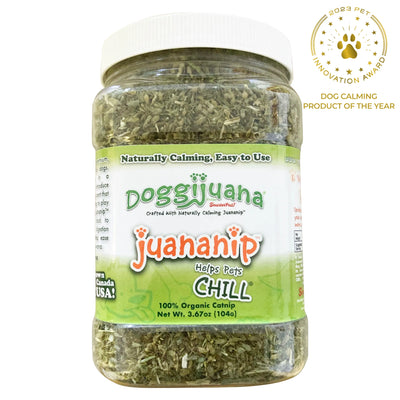
The dedicated chew toy, always in reach. The redirect only works if the legal option is closer than the chair leg. Fabric-and-rope chews with some give are the teething sweet spot, and the Tuffer Chewer minis are built for exactly this weight class: durable layers, a rope core, and sized for a puppy mouth. A pinch of Juananip in the refill pocket makes the legal chew the most interesting object in the room, which is the entire game during the gnaw peak.
The cold trick for the sore days. A clean washcloth, soaked and frozen, is the classic acute-relief move: cold pressure on sore gums, free, and replaceable. Rotate two so one's always ready.
The redirect ritual. When teeth land on furniture or hands, trade rather than scold: remove the illegal target, present the chew, and make the chew the fun one. Punishing teething chews teaches nothing, because the need doesn't go away; aiming it does.
The Teething Toolkit

Teething in the bigger puppy picture
The gnaw peak overlaps the general puppy chaos, and it helps to know which problem you're solving: slow, deliberate gnawing is the mouth (this guide), frantic evening wildness is usually an overtired or under-worked puppy (our puppy energy timeline sorts that out), and worry-shaped behavior has its own path (the honest calming-treats guide covers it). Most "bad puppy" weeks are just all three running at once, and all three have schedules.
After the teeth arrive
Once the adult set is in, the project changes from surviving teething to keeping 42 permanent teeth healthy for a lifetime: chewing keeps doing quiet maintenance work, and our guide to brushing your dog's teeth covers the active half. The chew habit you aimed well during teething becomes the adult dog's favorite hobby, and the Doggijuana lineup keeps it supplied for the long haul.


