


Every dog owner eventually notices the imbalance: dinner takes your dog thirty seconds, and then the evening is long. Puzzle toys exist to fix that math. They make food cost effort, and effort is exactly what most dogs are starving for, because a dog bred to work for a living is mostly unemployed in a modern living room. The good news is that puzzle work is one of the easiest enrichment upgrades there is: the motivation is built in, the equipment is cheap or free, and the payoff shows up as a calmer dog the same day.
What actually counts as a puzzle toy
The category is broader than the pet aisle makes it look. Anything that makes your dog think before they eat qualifies: treat-dispensing toys that pay out for rolling and nudging, food-stuffed chew toys that make a portion last, snuffle setups where kibble hides in fabric or grass, and scatter feeding, which is a puzzle with zero equipment. The common ingredient isn't plastic; it's a problem standing between the dog and the food. If your dog has to figure something out before swallowing, it's a puzzle toy.
Why food-powered brain work calms dogs
Mental effort tires dogs differently than physical exercise, and often faster. Twenty minutes of working a dispenser or hunting hidden kibble produces the kind of satisfied settle that a second walk often doesn't, because problem-solving drains the part of the dog that gets into trouble when it's bored. If your dog shows the restless symptoms (pacing, shredding, professional-grade staring), our guides to mental stimulation signs and brain games cover the why and the wider activity menu; puzzle toys are the everyday workhorse of that program because they run on meals you were serving anyway.
The difficulty ladder (and the frustration trap)
The one way puzzle toys go wrong is starting too hard. A dog that fails at a puzzle for ten minutes doesn't learn persistence; they learn the puzzle is furniture. Start embarrassingly easy: a dispenser on its loosest setting with a payout on the first nudge, kibble scattered in short grass, a treat under one cup. Let your dog win fast and often, then tighten one variable at a time. The ladder matters more than the toy: the same dispenser serves a beginner and an expert depending on the setting, which is what makes a good adjustable one the best first purchase in the category. And when you're matching chew toys specifically to your dog's jaw and chew intensity, our difficulty-level deep dive has a quiz that does the matching for you.
The Puzzle Kit

Scent puzzles: the no-equipment version
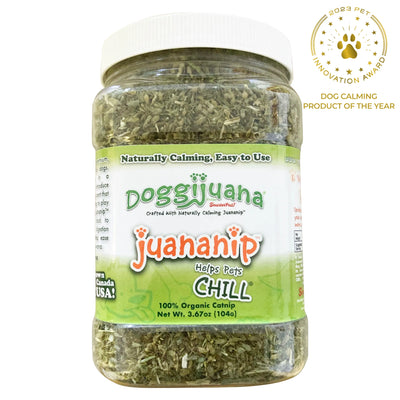
The most underrated puzzle toy is your dog's own nose. Hide a few treats (or a pinch of Juananip on a toy) around a room and let your dog work the space by scent alone: that's nose work, and ten minutes of it out-tires most walks because scent processing is genuinely hard cognitive labor. It's also the puzzle that scales forever, since you can always hide things better. Our guides to scent-driven play and why scent is such good exercise cover the technique from first hide to expert-level.
DIY starters before you buy anything
Test the concept for free tonight: kibble in a muffin tin with tennis balls on top (lift the ball, win the food), a towel rolled around a line of treats for your dog to unroll, or plain scatter feeding across the kitchen floor. If your dog lights up at any of these, they're a puzzle dog, and the bought gear is an upgrade rather than a gamble. The upgrade earns its price on durability and adjustability: a dispenser that survives enthusiasm and tightens as your dog gets smarter.
Making it stick
Two habits turn puzzle toys from novelty into routine. Feed at least one meal a day through some kind of puzzle (the bowl teaches nothing), and rotate the puzzles weekly so the problem stays fresh; a puzzle your dog has fully solved is just a slow bowl. Pair the midday puzzle with your leaving-the-house routine and you've also covered the alone hours, which our busy-while-you're-at-work guide builds out in full. The Doggijuana lineup has the whole food-powered toolkit in one place.


