


Most anxious cats don't look anxious. They don't yowl or pace or act out in obvious ways. They just withdraw. They stop sitting in the window. They hide under the bed more. They get a little jumpier, a little quicker to disappear when guests arrive. Their owners chalk it up to being moody, or shy, or just "the way they are."
That's how cat anxiety goes unaddressed for months, sometimes years, while the cat is in a state of ongoing low-level stress.
The good news: mild-to-moderate cat anxiety responds well to natural intervention. The catch is that it requires consistency, not a one-time fix.
What's actually causing it
Four things drive the majority of cat anxiety:
Under-stimulation. Cats are hunters. An indoor cat with no consistent outlet for that drive doesn't just get bored. It develops a chronic background stress state. Restlessness, destructive behavior, overgrooming, and social withdrawal can all trace back to not enough physically and mentally engaging activity. If your cat is anxious and doesn't get consistent daily play, this is almost certainly part of the picture.
Environmental disruption. New pets, new people, rearranged furniture, schedule changes, a baby, a move. Cats map their territory in detail and are genuinely unsettled when that map no longer matches reality. What looks like sulking after you rearrange the living room is often genuine disorientation.
Event-based stress. Vet visits, travel, construction noise, fireworks, houseguests. These have identifiable triggers and a predictable window, which makes them easier to manage than chronic types.
Generalized anxiety. Some cats are wired for a higher baseline stress response with no clear single trigger. Managing this takes more layers and sometimes a vet conversation.
How to tell if your cat is actually anxious
The signs are easy to miss individually. Together, they paint a clearer picture. Use the checker below to see what you're working with.
The remedies, in order of how much they actually help
Consistent play — this one matters most
Daily structured play is the single most effective natural intervention for cat anxiety. Two sessions of 10-15 minutes each, done consistently, changes the baseline. Not occasionally. Not whenever you have time. Consistently.
The mechanism: completing the hunt cycle (stalk, chase, pounce, catch) releases neurochemicals that bring a cat to a calm, satisfied state. A cat that gets that cycle regularly doesn't build up the same tension as one that doesn't. It's not distraction from anxiety. It's the nervous system getting what it actually needs.
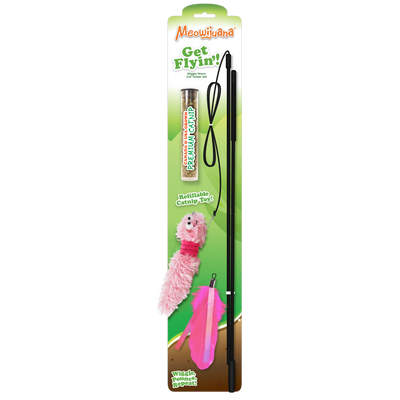
What makes a session effective: use something that moves like prey. Wand toys and teasers that dart and retreat unpredictably work well. Drag the toy away from your cat, not toward them. Let them catch it periodically, and end each session by offering a small meal or treat. That final step (hunt, catch, eat) closes the loop neurologically.
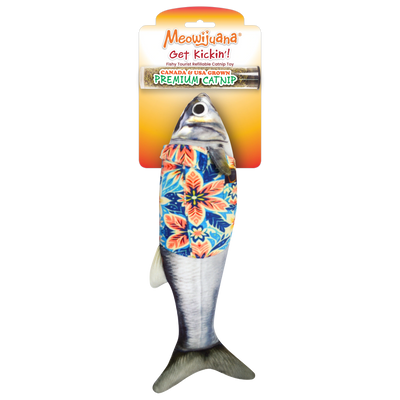
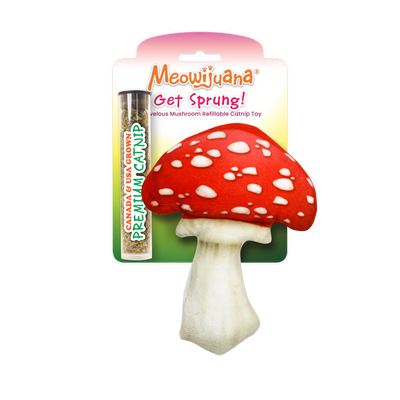
Between sessions, solo toys that engage independent hunting behavior extend the benefit. Kicker toys are designed for the grab-and-bunny-kick response, which cats find genuinely satisfying in a way that passive toys don't deliver. For your daily interactive sessions, Meowijuana's wand and teaser toys are the right tool. And for cats whose anxiety overlaps with boredom, enrichment ideas from our indoor cat enrichment guide are worth layering in.
Play Essentials for Anxious Cats

Environment
An anxious cat needs somewhere to go when overwhelmed. Two things matter most:
Vertical space: at least one high perch where they can observe the room from above. Cats feel more secure with the height advantage and the ability to see what's approaching.
A covered low hiding spot away from foot traffic. Cats need both options: observe from above when they feel okay, retreat completely when they don't. If they only have one, the anxiety has fewer places to go.
Beyond that: consistent feeding times, stable litter box locations, and minimizing unnecessary rearrangement all reduce ambient stress more than most people expect. If your cat's anxiety started after a change in their environment, our guide on signs your indoor cat is stressed can help you identify what shifted.
Catnip and silvervine
Neither calms cats in a sedative sense. What they do is create a brief intense positive arousal response that burns energy and often leaves a cat noticeably relaxed afterward.
For anxiety management, this is most useful before predictable stressors. A play session with a catnip or silvervine-enhanced toy 30-45 minutes before a vet visit, guests arriving, or a known trigger can blunt the anxiety spike. The response to catnip is genetic (roughly half of cats respond significantly), but silvervine tends to produce a stronger and broader response. Most cats react to it even if catnip does nothing for them. Our silvervine sticks guide covers how the response works.
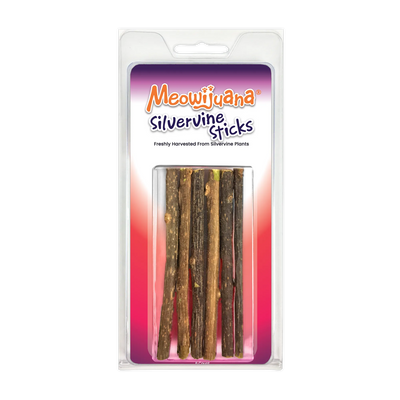
Meowijuana's silvervine sticks are also useful as a comfort chewing behavior. Some cats will chew on them for several minutes and emerge noticeably calmer, which makes them a practical addition to an anxiety toolkit beyond just the play component.
Calming herbs and scents
Valerian root, chamomile, and lavender in the right form and concentration have documented calming effects in cats. The important caveat: form and concentration matter. Dried herbs and properly diluted applications are appropriate. Concentrated essential oils are a different situation and can cause harm at certain concentrations.
For the full breakdown on which herbs do what and how to use them safely, our calming herbs guide has everything you need. The short version: these work best as a layer on top of play and environmental changes, not as a standalone solution.
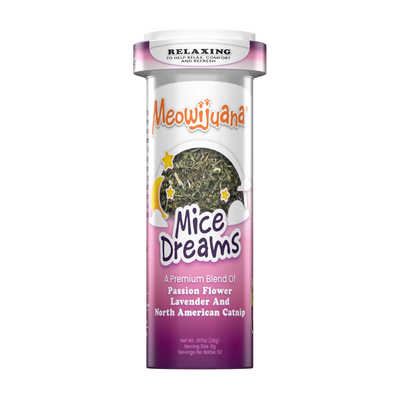
For a calming blend specifically, Meowijuana's Mice Dreams is our relaxing formula, built for cats that respond well to a mellower, soothing play session rather than a high-energy one. It pairs well with the end-of-session wind-down.
Use the finder below to match a remedy approach to your cat's specific situation.
Calming Play Kit
When natural remedies are not enough
Three to six weeks of consistent play, environmental changes, and calming support handles most mild-to-moderate cat anxiety. If you're doing all of that and seeing no meaningful improvement, or if the anxiety is severe (not eating, meaningful weight loss, self-injury from overgrooming), a vet conversation is the right next step.
Behavioral anxiety medications for cats exist, they work, and using them is not failure. Natural approaches complement medical treatment well. They're not always sufficient on their own when anxiety is significant.


