Meowijuana

Tortoiseshell Cat Personality Traits

· · 5 min read

Every tortie owner knows the word: tortitude. The reputation is fierce, opinionated, and loud about it, and unlike most coat folklore, this one comes with an actual study attached. What the evidence really says, why nearly every tortie is female, and why no two tortie coats in history have ever matched.

Tortoiseshell cats come with the most confident reputation in the coat-color folklore, and it has its own word: tortitude. Ask a tortie owner and you'll hear about a cat with opinions, a cat who runs the household, a cat whose affection is fierce and whose displeasure is documented. Unlike most coat stereotypes, this one even has a study attached, which makes torties the most interesting stop in the whole personality series after the orange cats: their genetic mirror image.

Where tortitude comes from (and what the evidence says)

The folklore says torties are feistier, sassier, and more strong-willed than average, and for once the surveys half-agree: research on owner reports has found that people living with tortoiseshell and calico cats described certain challenging behaviors (think swatting and protest commentary) somewhat more often than owners of other colors. The honest reading matters, though: the effect was modest, it measured what owners report rather than what cats objectively do, and reputation shapes perception (a tortie's grumble gets logged as tortitude, a tabby's gets forgotten). Coat color stays a weak predictor of any individual cat, with socialization and temperament doing the real work. Tortitude is folklore with a footnote, not a diagnosis.

The genetics: orange's story, flipped

Here's the genuinely great part. The tortoiseshell coat needs both black and orange pigment, and the orange gene lives on the X chromosome, so a cat needs two X chromosomes to wear both colors at once. That's why nearly every tortie is female, the mirror image of orange cats being roughly four-fifths male. Male torties exist but are famously rare, usually carrying an extra chromosome.

And the patches themselves are a one-off: early in development, each cell randomly switches off one of its two X chromosomes, and every patch of black or orange on a tortie marks which X stayed active in that patch's founding cell. That means every tortoiseshell coat is a map of its owner's embryonic development, and no two torties in history have ever matched. Your cat is wearing a pattern that cannot be repeated, which, to be fair, may explain some of the attitude.

Playing to the tortie profile

If your tortie fits the reputation, you have an intense, opinionated player: fully committed when a session interests them, vocally unimpressed when it doesn't. Big-energy formats earn their respect (kicker wrestling, dramatic wand finishes), stimulating blends match the full-send style, and the quickest way to lose a tortie's attention is a halfhearted session. If yours turned out to be a gentle soul in a loud coat, that's the folklore being folklore, and the blend-by-personality guide maps the quieter lanes by the cat you actually observe.

For the Spicy Ones
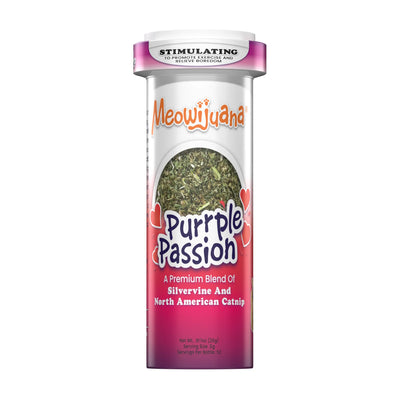
Meowijuana Purrple Passion container, a blend of Silvervine and North American catnip for stimulation.
Purrple Passion
$ 9.99
Meowijuana Kalico Kush catnip bottle featuring a premium blend of valerian root and North American catnip.
Kalico Kush
$ 9.99
Meowi-Waui catnip product in a pill bottle-style container, labeled as a premium North American catnip bud shake.
Meowi-Waui
$ 9.99

The tortie, decoded

Four facts behind the attitude. Click each one.

♀️
Nearly all torties are female
Orange's arithmetic, flipped
The coat needs black and orange at once, and orange rides the X chromosome, so it takes two X chromosomes to wear both. Orange cats run four-fifths male; torties run almost entirely female. Male torties exist, famously rarely, usually with an extra chromosome.
🎨
No two torties have ever matched
The coat is a developmental map
Each cell randomly silences one of its two X chromosomes early in development, and every black or orange patch records which one stayed on. The pattern is set by chance, cell by cell, which makes every tortoiseshell coat literally unrepeatable.
⚖️
The tortitude verdict
A real signal, modestly sized
Owner-report research has found tortie and calico owners describing feisty behaviors somewhat more often than other colors — the rare coat stereotype with data behind it. But the effect is modest, it measures owner perception, and reputation feeds perception. The coat starts the story; your cat finishes it.
🌶️
The blend match
Intensity deserves intensity
If yours fits the profile, the stimulating lane earns the respect: Purrple Passion for the full-send sessions, Kalico Kush for the bright-energy days. The gentle tortie in a loud coat does fine on Meowi Waui, and the blend-by-personality guide sorts it by the actual cat.

Tortie vs calico: the white-patch difference

The two get confused constantly, and the line is simple: a tortoiseshell is black and orange mottled together with little to no white, while a calico adds a third color by carrying a white-spotting gene, producing the classic patchwork of black, orange, and white blocks. Genetically they're close cousins (both need the two-X setup, which is why calicos are nearly all female too), and the folklore treats them as siblings: calicos inherit a milder version of the same spirited reputation. The calico story has enough of its own wrinkles to deserve its own post, and it's next in the series.

So is tortitude real?

As real as any coat folklore gets: a genuine survey signal, modest in size, wrapped in a century of reputation and a coat that genuinely is one of a kind. The fairest summary is the one that closes every post in this series: the coat tells you where the folklore starts, and the cat tells you everything else. The full coat-color personality guide covers every color against the evidence, and whatever opinion your tortie holds about catnip, the blend lineup has a lane for it.

Frequently asked questions

What is the personality of a tortoiseshell cat? +
Torties carry the famous 'tortitude' reputation: feisty, opinionated, and strongly bonded to their people. Owner-report research has found tortie owners describing spirited behaviors somewhat more often than other colors, but the effect is modest, and coat color remains a weak predictor for any individual cat.
Is tortitude real? +
Partly. It's the rare coat stereotype with a study behind it: research on owner reports found tortoiseshell and calico owners describing certain challenging behaviors more often than average. The honest caveats are that the effect was modest, it measured owner perception, and a famous reputation shapes what owners notice and report.
Why are almost all tortoiseshell cats female? +
The tortie coat needs black and orange pigment at once, and the orange gene sits on the X chromosome, so displaying both colors takes two X chromosomes. That's the mirror image of orange cats, which run about four-fifths male. Male torties exist but are rare, usually carrying an extra X chromosome.
What's the difference between a tortoiseshell and a calico? +
White. A tortoiseshell is black and orange mottled together with little to no white; a calico adds a white-spotting gene, producing distinct blocks of black, orange, and white. They're genetic cousins, both requiring the two-X setup that makes them nearly all female.
Are any two tortoiseshell cats alike? +
Not in coat. Each patch of black or orange records which X chromosome randomly switched off in that patch's founding cell during early development. The pattern is set by chance, cell by cell, so every tortoiseshell coat is genuinely one of a kind.

The SmarterPaw Team

We're the team behind Meowijuana — found in 7,000+ retailers worldwide including PetSmart, Petco, and Walmart. Founded in 2015 in Lenexa, Kansas.

Share
← Back to Meowijuana Blogs & News

Leave a comment

Please note, comments need to be approved before they are published.