


Somewhere in the first weeks of kitten ownership, almost everyone runs the same experiment: present the tiny new cat with a catnip toy, wait for the famous show, and get absolutely nothing. No rolling, no rubbing, maybe a polite sniff before the bottle cap on the floor wins their attention back. It's one of the most common "is something wrong with my cat" questions we hear, and the answer is the best kind: nothing is wrong, you're just early.
Why your kitten is ignoring the catnip
The catnip response isn't there at birth. It develops with maturity, and most kittens don't show any reaction before roughly three months; for many cats the full response doesn't switch on until closer to six months, and some late bloomers take longer still. Until that switch flips, catnip is just a mildly interesting plant smell, which is exactly how your kitten is treating it.
There's a second piece worth knowing up front: the response is inherited, and roughly one in three adult cats never develops it at all. So a kitten ignoring catnip tells you nothing yet. You'll get your real answer somewhere after the six-month mark, and either answer is fine, because the non-responders have their own aisle (more on that below).
Is catnip safe for kittens?
Yes. Catnip is non-toxic and non-addictive at every age, and a kitten that sniffs or even nibbles some before the response develops isn't in any danger; it's just wasted on them. The usual sensible rules are the same ones that apply to adult cats: small amounts, supervised sessions with any toy small enough to chew pieces off, and no need to push it on a cat who walks away. There's nothing about catnip that requires waiting, only the practical fact that it won't do anything yet.
When and how to run the first test
Around six months, run a proper test: a pinch of loose catnip on the floor or a scratcher, in a calm moment, and watch. A responder tells you immediately: sniffing turns into cheek rubbing, rolling, and the whole performance inside a minute or two. A shrug means either not yet or not ever, and the way to tell the difference is to simply retry every few weeks. No response by around a year, and you likely have a non-responder, which changes the shopping list but not the fun.
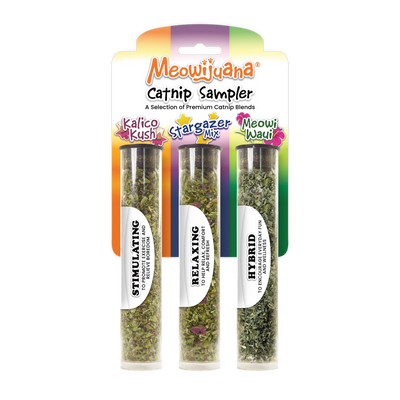
For the first tests, small and varied beats big and singular. A sampler with a few different blends lets a young cat vote on their own preference without committing you to a full jar, and Meowi Waui, our most popular starting point, is the classic first blend for the cats who do respond.
The First-Catnip Kit


What to do until the switch flips
A kitten doesn't need catnip to be the most entertained animal in the house; they need prey to chase, and they need it constantly. Wand teasers and lightweight toys sized for a small hunter do the enrichment work catnip will eventually help with. The smart move is buying the refillable toys now and letting them earn their keep empty: every Meowijuana plush, kicker, and teaser attachment works as a plain toy from day one, and the velcro catnip pocket sits there waiting for the six-month test to come back positive. One purchase, two eras of the same cat.
If you want the deeper background on how the response works while you wait, our complete catnip guide covers the chemistry, and the play-needs guide is the real kitten-era manual, because at this age, play is the whole enrichment program.
If your cat turns out to be a non-responder
A third of cats shrug at catnip forever, and the aisle doesn't end there. Silvervine reaches most of the cats plain catnip misses, and valerian catches others; our silvervine sticks guide covers the main alternative format, and the blend-by-personality guide maps which lane fits the cat you're getting to know. Between catnip, silvervine, and valerian, nearly every cat responds to something, and the fun of the first year is finding out which.
Whenever your kitten's answer arrives, the full blend lineup will be ready for it.


