Meowijuana

White Cat Personality Traits

· · 6 min read

White cats carry a reputation for being gentle, reserved, and a little regal. Some of that is folklore, some traces to real genetics (including the famous hearing link), and knowing which is which changes how you play with them.

Ask around and you'll hear the same description of white cats again and again: gentle, calm, reserved with strangers, quietly attached to their person. It's one of the most consistent coat-color reputations in the cat world. Some of it is folklore doing what folklore does. But white cats are also one of the few coat colors where genetics genuinely reaches into behavior, which makes the stereotype worth unpacking rather than dismissing.

Where the gentle reputation comes from

Surveys of cat owners reliably describe white cats as calmer, shyer, and less bold than average, and that pattern has held for decades. The honest caveat first: coat color is a weak predictor of any individual cat's personality. Breed lines, early socialization, and plain individual temperament all matter far more than fur color, and plenty of white cats are unhinged little tornadoes who never read the surveys.

But the white-cat pattern isn't pure myth either, because the gene that makes a cat white does more than paint the coat.

The genetics that actually touch behavior

Most fully white cats get their color from a dominant white gene that suppresses pigment across the whole body. That same gene is famously linked to congenital deafness, most strongly in white cats with blue eyes: a meaningful share of blue-eyed white cats are deaf in one or both ears. It's the most direct coat-to-biology connection in cats, and it has real behavioral consequences.

A cat that hears less startles differently, relies more on vibration and sight, sleeps deeper, and can read as more cautious or aloof, especially with strangers approaching from outside their field of view. Some of the "reserved white cat" reputation is probably hearing-different cats being sensibly careful with a world they get less warning about. If your white cat doesn't react to crinkle bags or their name from another room, a vet can check hearing easily, and a deaf or partially deaf cat lives a completely full life with small adjustments.

Playing to a white cat's strengths

Whatever your white cat's hearing status, the reputation-informed play advice holds up: lead with sight and scent rather than sound. Wand lures with big visual movement beat jingle balls. Scent-forward formats (a strong catnip blend, a compressed lollipop, a stick-n-lick at cheek height) give them a play channel that doesn't depend on audio cues at all. Approach from where they can see you, and use floor vibration (a tap on the floorboards) rather than voice to announce playtime to a cat that may not hear it coming.

For the temperament side, the gentle-souls blend logic applies: if your white cat matches the calm, easily-startled profile, relaxing blends keep sessions inside their comfort zone, and hybrids cover the ones who split the difference. Our blend-by-personality guide maps the full decision, whatever profile yours turns out to be.

For the Gentle Souls
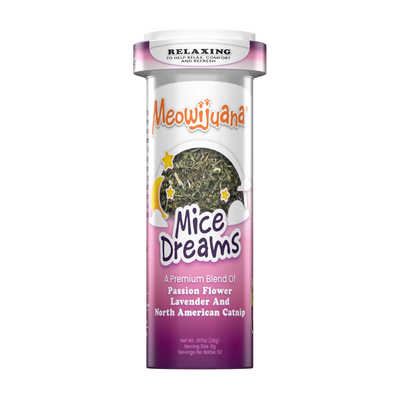
Mice Dreams catnip blend in a pill bottle-style container with calming ingredients like passion flower and lavender.
Mice Dreams
$ 9.99
Meowi-Waui catnip product in a pill bottle-style container, labeled as a premium North American catnip bud shake.
Meowi-Waui
$ 9.99
Packaging for Meowijuana Cloud 9, a catnip blend.
Cloud 9 Catnip Blend
$ 9.99

The white cat, decoded

Four things that make white cats different. Click each one.

🧬
The white isn't a color
It's a gene hiding every other color
Most fully white cats carry a dominant white gene that suppresses pigment across the whole coat. Underneath, genetically, your white cat is secretly a tabby or a tortie or a black cat with the paint turned off. That same gene reaches beyond the coat, which is why white is one of the few colors with real biological side effects.
👂
The hearing link
Strongest in blue-eyed whites
The white gene is linked to congenital deafness, most strongly in white cats with blue eyes, where a meaningful share are deaf in one or both ears. A quick home test: make an interesting sound from outside their line of sight and watch the ears. No swivel is worth a vet check. Deaf and partially deaf cats live completely full lives; they just experience the house differently.
☀️
The sunburn problem
White ears and noses burn
White fur gives poor sun protection, and ear tips and noses take the damage. Indoor sunbeams through glass are largely fine; unfiltered outdoor peak-hour sun is what adds up over years. For outdoor-access white cats, ask your vet about pet-safe sun protection for the ears. This is the most practical white-cat fact almost nobody mentions.
🎭
The temperament verdict
Folklore with a real footnote
Surveys keep describing white cats as gentle and reserved, and the hearing link gives that stereotype a real mechanism for some cats. But color describes populations, not your cat. Watch their actual startle threshold and play style, then match the catnip to the cat: relaxing blends for the easily overwhelmed, the full range for the bold ones.

The sun problem nobody warns you about

One genuinely practical white-cat fact: white fur offers poor sun protection, and white ears and noses sunburn. Cats that worship in sunbeams all day or have outdoor access can develop chronic sun damage on the ear tips and nose, which in cats is more than cosmetic over the years. Indoor sunbathing through glass is largely fine; unfiltered outdoor sun in peak hours is the thing to limit. If your white cat is an outdoor sun-seeker, your vet can recommend pet-safe sun protection for the ears.

So is the stereotype true?

The fairest summary: white cats earn their gentle reputation more often than chance, partly because the white gene really does shape how some of them experience the world. But the coat tells you where to start watching, not who your cat is. Read the actual cat: their play style, their startle threshold, their social battery. The full coat-color personality guide covers what the surveys say about every color, and the same rule applies to all of them: folklore describes populations, and you live with an individual.

Whoever your white cat turns out to be, there's a blend shelf for them: the full lineup runs from gentle to rocket fuel.

Frequently asked questions

What is the typical white cat personality? +
White cats are commonly described as gentle, calm, and reserved with strangers, and owner surveys have repeated that pattern for decades. Coat color is still a weak predictor for any individual cat: breed, early socialization, and individual temperament matter far more. The white coat gene does have real behavioral relevance through its link to hearing, which can make some white cats more cautious.
Are all white cats deaf? +
No. The dominant white gene is linked to congenital deafness, most strongly in white cats with blue eyes, where a meaningful share are deaf in one or both ears. Many white cats hear perfectly. If your white cat doesn't respond to sounds from outside their line of sight, a vet can check hearing easily, and deaf cats live full lives with small adjustments.
Why is my white cat so shy or aloof? +
Some white cats hear less than average, which changes behavior: deeper sleep, stronger startle response to unseen approaches, and more caution with strangers. What reads as aloofness is often a cat being sensibly careful with a world they get less audio warning about. Approaching within their field of view and announcing yourself with floor vibration rather than voice helps.
What toys and catnip work best for white cats? +
Lead with sight and scent rather than sound: visually dramatic wand lures over jingle toys, and scent-forward formats like strong catnip blends or compressed catnip that don't depend on audio cues. For temperament, calm or easily startled white cats do well with relaxing blends, while bolder ones handle the full range.
Do white cats need sun protection? +
White ears and noses sunburn, and chronic sun exposure on white ear tips can cause real damage over years. Sunbathing indoors through glass is largely fine; unfiltered peak-hour outdoor sun is what to limit. For white cats with outdoor access, ask your vet about pet-safe sun protection for the ears.

The SmarterPaw Team

We're the team behind Meowijuana — found in 7,000+ retailers worldwide including PetSmart, Petco, and Walmart. Founded in 2015 in Lenexa, Kansas.

Share
← Back to Meowijuana Blogs & News

Leave a comment

Please note, comments need to be approved before they are published.