


If you've ever watched your cat grab a toy with both front paws, hug it to their chest, and unload a burst of rapid back-foot kicks, you've seen the bunny kick. It looks like play, and it is. But it's also one of the oldest moves in the feline playbook, and understanding it explains why kicker toys hold a cat's attention in a way most toys can't.
The bunny kick is a hunting move, not a party trick
Cats are ambush predators built around a specific kill sequence: stalk, chase, pounce, grab, bite. For small prey, that sequence ends with a quick bite to the neck. But when a cat tackles prey close to its own size, or wrestles another cat, the physics change. The cat wraps its front legs around the target, pulls it into its chest, anchors with a bite, and rakes with the back claws.
That rake is the bunny kick. The front half of the cat controls and holds. The back half does the damage. In a real hunt it's how a cat overwhelms something too big to dispatch instantly, and in cat-to-cat wrestling it doubles as a defensive move: belly-up isn't surrender, it's a position where all four sets of claws point at the opponent.
Your living room cat has never needed any of this. The wiring is there anyway. Domestic cats keep the full predatory sequence regardless of whether dinner comes from a bowl, and instincts that don't get an outlet don't disappear. They come out somewhere: the couch cushion, a housemate cat who wasn't asking for it, or your forearm.
Why a kicker fits the instinct better than other toys
Most cat toys serve the front half of the hunt. Wands and teasers trigger the stalk and the chase. Balls trigger the pounce. But almost nothing in a typical toy basket can receive the finish: the grab, the body hug, the bite-and-kick. A ball is too small to hug. A wand attachment tears off. Your arm works, which is exactly the problem.
A kicker toy is sized and shaped for that final phase. It's long enough for the cat to wrap with both front legs, sturdy enough to take the bite, and it reaches all the way down the belly so the back feet have something to rake. It's the only toy category where the whole design goal is "survive being killed repeatedly."
That's why kickers produce a different play style than anything else you'll bring home. It's not chase energy. It's wrestling: full-body, gripping, rolling, kicking. For a lot of cats it's also the most intense exercise they get, because a proper bunny-kick session works the core and hindquarters in a way batting a ball never will.
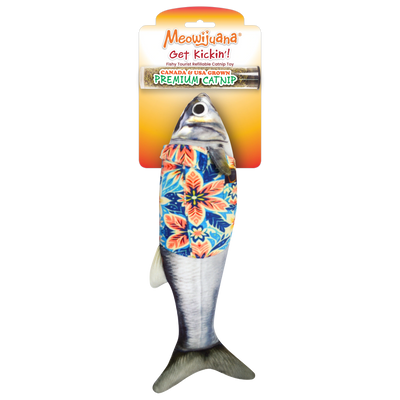
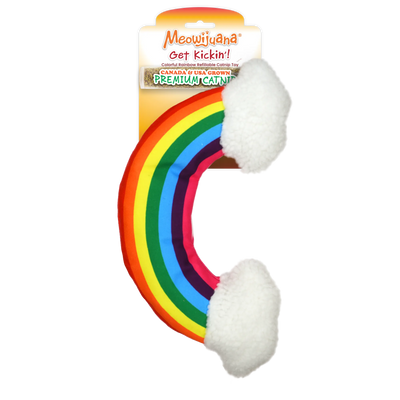
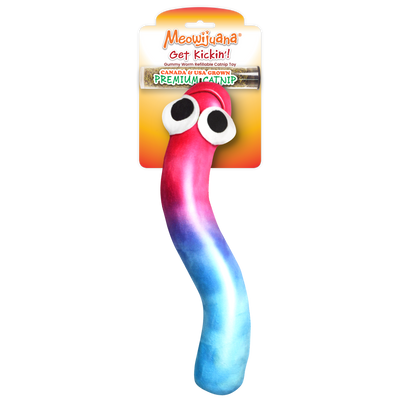
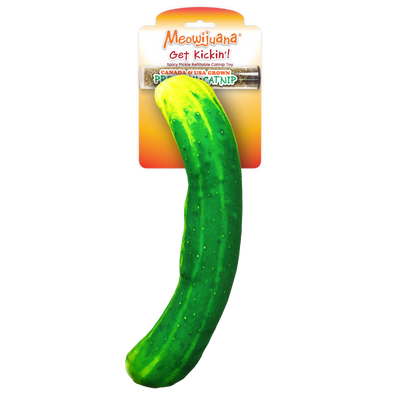
The Get Kickin' Line
What to look for in a kicker toy
Length. The toy needs to span from front-paw grip to back feet. Too short and the cat can't complete the move; the kick misses. For most adult cats that means a toy roughly the length of their torso. Bigger cats need the larger kickers, which is why "large cat kicker toy" is one of the most common searches in the category.
Durability where it counts. The bite anchor point and the belly of the toy take the abuse. Reinforced fabric matters more than cute details that get shredded in week one.
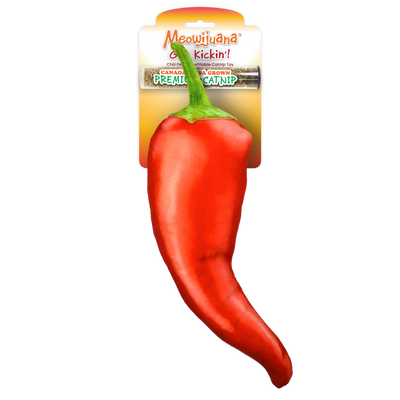
A refillable catnip pouch. Every Meowijuana Get Kickin' kicker has a Velcro pocket you can reload with fresh catnip. This matters more for kickers than other toys, because a kicker gets buried in wrestling sessions and a scent refresh is the fastest way to restart interest in a toy your cat has "already killed."
Kitten sizing. Kittens bunny kick almost from the start, since play-wrestling is how they practice. A full-size kicker overwhelms them, so start smaller and size up. One note on timing: the catnip response doesn't switch on until around 6 months, so for young kittens the toy itself does the work and the catnip pocket becomes relevant later.
Does a kicker toy need catnip?
No. The bunny kick is hardwired and a well-designed kicker triggers it on shape and feel alone. Catnip lowers the threshold: it gets a mellow cat engaged faster and keeps sessions going longer, but it's an amplifier, not the engine.
This matters for the roughly one in three cats who don't respond to catnip at all. A kicker still works for them. If your cat is a non-responder, try loading the pouch with silvervine instead, which reaches most cats that catnip misses, or just animate the toy and let the instinct do the rest. We covered the full set of options in our catnip-free play guide.
How to run a kicker session
A kicker left lying on the floor is furniture. The toy works when it behaves like prey, and that takes about thirty seconds of your involvement.
The best pattern is the handoff: use a wand or teaser for the stalk-and-chase phase, and when your cat commits to the pounce, present the kicker as the thing they caught. Chase with the wand, catch with the kicker. Together they cover the entire hunt sequence, which is the structure behind our indoor enrichment guide: a cat that gets to complete the sequence winds down satisfied instead of restless.
You can also animate the kicker directly. Drag it past a doorway, twitch it under a blanket edge, or toss it low across the floor. Once the cat grabs it, stop. The wrestling phase is theirs; your job was the delivery. Most cats will hug, kick, bite, release, and re-attack several times before they're done. Session length varies by cat, and if you're unsure how much total playtime yours needs, our guide to how much play cats need breaks it down by age and energy level.
Rotate the kicker out of sight between sessions. Prey that's always visible stops registering as prey. A kicker that reappears twice a week with a refreshed pouch stays interesting for months.
Kickers as a redirection tool
If your cat grabs your arm and bunny-kicks it, that's not aggression in the temper sense. It's the wrestling instinct firing at the only target available. Punishing it doesn't remove the instinct; it just adds conflict.
The fix is a legal target. Keep a kicker within reach of the spots where the grabbing happens. When the play-wrestle mood hits, present the kicker into the grab instead of pulling your arm away (pulling away reads as prey escaping and makes the grip tighter). Most cats transfer readily, because the kicker is honestly a better wrestling partner than your arm: it doesn't yell, and it can take the back claws at full power.
Same logic applies in multi-cat homes where one cat wrestles a housemate harder than the housemate wants. A kicker gives the instigator somewhere to spend that energy. Pair it with a rounded-out toy kit so every phase of the hunt has an outlet, and the ambushes on the other cat usually drop off.
Refill and Restock

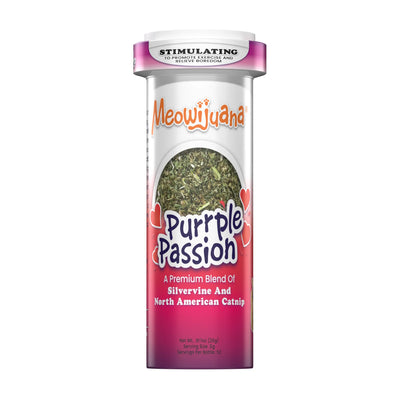

Every cat has the bunny kick in them. The only question is what receives it: the couch, your arm, or a toy built for the job. The full Get Kickin' collection covers sizes from kitten-friendly to big-cat, every one of them refillable.


