


If you've spotted a catnip lollipop and wondered whether it's a joke product, it isn't. It's one of the most practical formats catnip comes in: compressed catnip and silvervine pressed into a lollipop shape on a stick, built for the things cats naturally want to do with their mouths. No loose leaf, no mess, no refilling. Here's what they are and why they've earned a permanent spot in a lot of toy boxes.
A lollipop your cat licks, chews, and bats around
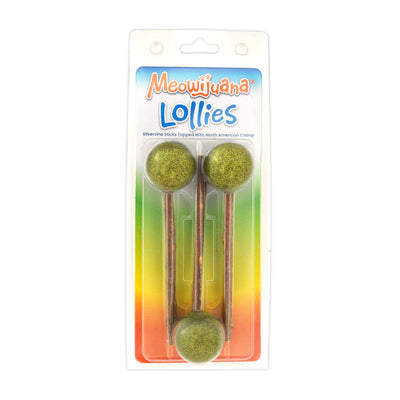
A catnip lollipop is compressed botanicals, not candy. Meowijuana Lollies press catnip and silvervine together into a dense, lollipop-shaped head on a stick. The compression matters: instead of a pinch of loose catnip that's spent in one session, the compressed head releases its aroma gradually as your cat licks, chews, and rubs against it, so one Lolli delivers weeks of sessions rather than minutes.
The stick is part of the design. It gives the toy a handle for batting and wrestling, keeps the compressed head up off the floor, and gives cats something to grip while they work on it. Some cats lick, some chew, some cheek-rub, and plenty do all three in one sitting.
What's actually in one
Two ingredients do the work: compressed catnip and silvervine. The catnip brings the classic nepetalactone response. The silvervine brings a second set of active compounds that work through different receptors, which is why the combination matters more than it might sound.
Roughly one in three cats doesn't respond to catnip at all. It's genetic, and no amount of higher-quality catnip changes it. But most catnip non-responders do respond to silvervine. Because Lollies contain both, they reach cats that would ignore a pure catnip toy entirely. If you've written your cat off as "immune to catnip," a combined format like this is the one worth testing before you give up. Our silvervine vs catnip guide covers the science of why the two work differently.
What cats actually do with them
Licking. The compressed surface is satisfying to rasp with a rough tongue, and every lick releases fresh aroma. For cats that like to lick fabric or groom obsessively, it's a better outlet than your couch.
Chewing. Gnawing on the dense head gives cats a safe, natural chew target. Chewing also happens to be good for teeth and gums: the mechanical action and extra saliva provide some passive dental benefit, the same way chew-focused silvervine sticks do.
Batting and carrying. The stick turns the whole thing into a toy. Cats bat it across the floor, pick it up by the handle, and wrestle it. It's a toy and a botanical in one object, which is the real pitch: it entertains and settles at the same time.
Compressed Catnip Formats
Are catnip lollipops safe?
Yes, with the same common-sense rules as any chew toy. The ingredients are all-natural compressed botanicals, and both catnip and silvervine are non-toxic to cats. Neither is addictive, and cats self-regulate: when they've had enough, they walk away.
Two practical guidelines. First, supervise play sessions, especially early ones while you learn how your cat engages with it. Second, replace the Lolli when it's worn down. A heavily chewed head eventually gets small enough that it's time for a fresh one, the same as any chew toy.
One timing note for kitten owners: the catnip response doesn't switch on until around 6 months of age, and silvervine sensitivity is also better established in mature cats. A young kitten ignoring a lollipop isn't a verdict, it's a calendar issue. Try again after 6 months.
How to introduce one
There's no technique required, which is part of the appeal. Hand it over and watch what happens. Most cats investigate by sniffing, then commit to licking or chewing within a minute or two. Sessions typically run 5 to 15 minutes before the cat wanders off to groom and settle, which is the normal end of a catnip response cycle.
Two things extend the life of a Lolli. Put it away between sessions rather than leaving it out: constant access dulls the novelty and the response, while a Lolli that comes out a few times a week stays exciting for weeks. And store it sealed, since the aroma is the engine and airtight storage keeps it strong.
Where lollipops fit in the toy box
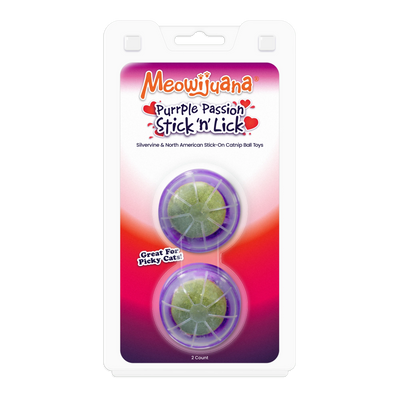
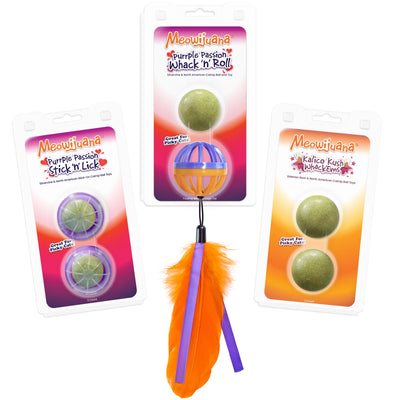
Think of the compressed category as the no-mess corner of the catnip world. Loose blends are the most flexible format but need a refillable toy or a surface. Sprays enhance toys you already own. Compressed formats like Lollies, stick-n-licks, and Whack'Ems balls ARE the catnip, pressed into an object your cat interacts with directly, no cleanup involved. (Silvervine sticks live next door: they're natural sticks rather than compressed material, though they serve the same no-mess, chew-it-directly role.)
Within that category, the lollipop's niche is the lick-and-chew cat: the ones that want to work on something with their mouth rather than kick or shred it. Pair it with a kicker for the wrestlers' moments, and you've covered both ends of the play spectrum. If you're still figuring out which formats suit your cat, our complete catnip toys guide maps the whole landscape, and the compressed catnip collection has the full no-mess lineup.


