


Every dog owner knows the moment. The walk was great, the sniffing was world-class, and now there's a dog standing at the door wearing four socks made of mud. The bathtub is upstairs. Dinner is in twenty minutes. This post is about the tool that fills the gap between "track it through the house" and "full bath on a Tuesday."
Why the in-between cleanup matters more than bath day
Dogs don't get dirty on a schedule. They get dirty every single walk, a little or a lot, and most of it comes in on the paws: mud, street dust, lawn-chemical residue, and in winter, road salt and de-icer. Whatever rides in on the paws ends up in two places, your floors and your dog's mouth, because licking is how dogs deal with dirty feet.
Bathing after every walk isn't the answer. Wash a dog too often and you strip the natural oils that keep the coat and skin healthy, and you trade muddy floors for a dog with dry, itchy skin. The practical middle ground is the wipe-down: enough to handle the everyday grime, gentle enough to use daily, fast enough that you'll actually do it.
When a wipe-down is enough (and when it isn't)
A fair rule of thumb: wipes handle anything that's on the coat, rinsing handles anything that's in it, and baths handle anything you can smell from across the room.
Dry dirt, dust, street grime, light mud on the paws: wipe it. Caked mud up the legs: knock off the heavy stuff, rinse with water, then finish with a wipe. Rolled in something foul, got into grease, or coated nose to tail: that's a bath, and no wipe is going to argue otherwise.
The 60-second post-walk routine
The routine below is the whole thing. Keep the wipes at the door, in the same basket as the leash, and it becomes as automatic as unclipping the harness. Paws first, one at a time, with a press between the pads where grit actually hides. Then the splash zone, legs and belly. Then a coat pass if the walk was a dusty one. Face comes last, always with a clean section of wipe, never the one that just did the paws.
The step most people skip is the one worth keeping: while you're holding each paw anyway, look at it. Cracked pads, redness between the toes, a burr working its way in. In winter this check earns its keep double, because road salt and chemical de-icers dry out pads, and what your dog doesn't get wiped off, they lick off. A ten-second paw wipe after a salted-sidewalk walk is less about your floors and more about what's going in your dog's mouth.
What to look for in a dog wipe
Same logic as everything a dog wears home: assume it ends up getting licked. That rules out household cleaning wipes completely (those are for countertops, never animals) and makes baby wipes a poor habit, since they're formulated for human skin. A dog wipe should be alcohol-free, free of harsh fragrance, and sturdy enough to handle a paw without shredding.
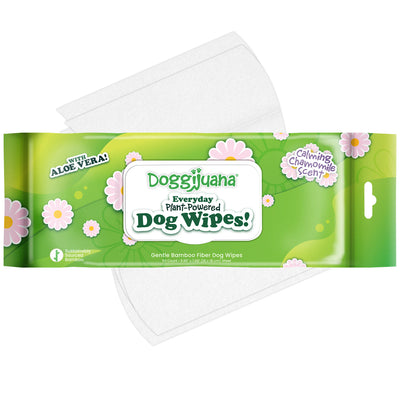
Ours are built exactly for this job. Everyday Plant-Powered Dog Wipes are made with 100% bamboo fibers and aloe vera, alcohol-free, with a light chamomile scent, made for muddy paws and mystery messes. One pack at the door, one in the car, and mud season gets a lot less dramatic.
The door-basket essential
Make it the easy habit
The wipe-down sticks when it costs nothing: wipes live with the leash, the routine takes a minute, and your dog gets something out of it too. A treat at the end turns paw handling from a chore into a trick, and dogs that get their paws handled calmly are easier at the vet and the groomer for life.
The dogs that need this most are the ones doing the best walks. Long sniffy walks are the best kind of exercise a dog can get, and they're also the muddiest; our guide to scent-driven play covers why that nose-down time matters so much. For the cold months specifically, how cold is too cold for dogs pairs well with this routine, and our snow-day guide covers the days you skip the walk entirely. For everything else dog households keep coming back for, the Doggijuana best sellers and fan favorites collection is the shortcut.


