


Every dog owner has watched it: the walk stops, the head goes down, and the dog starts grazing like they've reconsidered their whole career. Why do dogs eat grass? The folklore answer says they're sick and making themselves vomit, and it's one of the most repeated pieces of dog wisdom there is. It's also mostly wrong, which is good news, because the real answer is far less worrying.
The short answer: it's usually normal
Grass-eating is one of the most common behaviors in perfectly healthy dogs. When researchers have surveyed dog owners about it, the pattern that emerges undercuts the folklore on both ends: the large majority of grass-eating dogs show no signs of illness beforehand, and most don't vomit afterward either. Grazing shows up in wild canids too, so the instinct predates the backyard. A dog calmly sampling the lawn on a walk is doing a normal dog thing, not sending a distress signal.
So why do they do it?
Honest answer: the science isn't fully settled, and the leading explanations probably all contribute. Grass adds fiber and roughage that dogs may simply seek out. Some dogs plainly like the taste and texture, especially the fresh spring-green stuff. Inherited scavenger instinct plays a part, since canids have always eaten plant matter alongside prey. And for some dogs, grazing is simply something to do, which is the one version worth your attention, covered below.
The vomiting myth, corrected
The "dogs eat grass to make themselves sick" story survives because the exceptions are memorable: the occasional dog does gulp grass frantically and vomit, and that's the time everyone remembers. But most grass-eating produces no vomiting at all, and most dogs showed no sign of feeling unwell before grazing. The useful distinction is the style: calm, casual sampling is the normal version; sudden, frantic, compulsive gulping (especially from a dog who seems off) is the exception that deserves a closer look.
The one real danger: the lawn, not the grass
Grass itself is harmless to dogs. What's on it may not be: fertilizers, herbicides, and pesticides turn an innocent habit into a chemical exposure, and public grass adds parasite risk from other animals' leavings. The practical rules: know what's been applied to your own lawn and keep your dog off treated grass for the label's recommended window, be choosier about roadside and park grazing, and if your dog is a devoted indoor-outdoor grazer, a pot of homegrown grass is the clean version. (Cat grass kits, which are just young cereal shoots, are safe for dogs too; our cat grass guide covers what those actually are.)
When it's a vet question
The flags are about change and context rather than grass itself: a sudden increase in frantic grazing, repeated vomiting with or without grass, grass-eating paired with appetite loss or lethargy, or a dog who seems to be gulping anything non-food compulsively. Any of those is a vet conversation, where the grazing is the symptom being mentioned, not the diagnosis.
The boredom signal worth catching
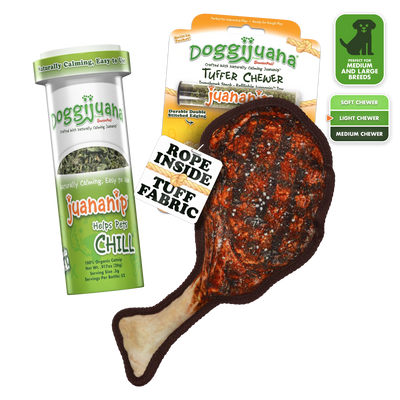
Here's the version owners can actually do something about: a dog who grazes extensively out of idleness is often a dog whose walk is the day's only event. The fix is giving the outing (and the day) more jobs: sniff-heavy walks that let the nose work, a meal fed through a puzzle instead of a bowl, and a real chew session as the daily wind-down. Our guides to scent as exercise and brain games cover the program, and a dog with enough to do tends to treat the lawn as scenery rather than a buffet.
Better Things to Chew On

The bottom line
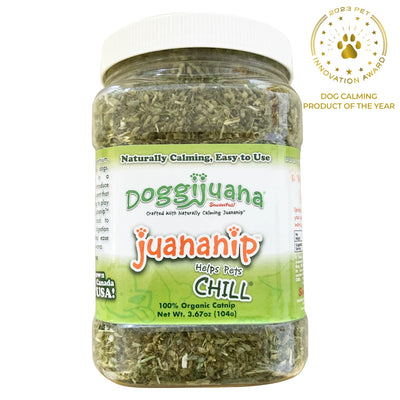
Calm grazing is normal, the vomiting story is mostly myth, the chemicals are the real risk, and frantic or changed behavior is the vet flag. Beyond that, the lawn habit is one more reminder that dogs need their days filled: the scent-driven play guide is the deepest well for that, and the Doggijuana lineup keeps the better chewing options stocked.


