Doggijuana

How Cold Is Too Cold for Dogs?

· · 5 min read

Every winter walk starts with the same doorway calculation: is this fine, or is this the day we skip? The commonly used temperature guardrails, the adjustments for size and coat, the signs your dog is done before you are, and the indoor plan that makes skip days guilt-free.

Every dog owner in a winter climate runs the same doorway math from November to March: coat on the dog or not, long loop or short one, or is today a skip day entirely? The internet's answers range from "dogs are fine, they're wolves" to panic at the first frost, and neither serves the actual question. Here are the guardrails vets and trainers commonly use, the adjustments that matter more than the number on the thermometer, and the plan for the days the answer is "not today."

The temperature guardrails

The commonly used framework runs in bands. Above roughly 45°F, cold is a non-issue for nearly all dogs. From about 45 down to freezing, most dogs are still fine, but the small, the thin-coated, the very young, and the senior start needing shorter outings and maybe a layer. Below freezing, those vulnerable groups are into genuine-risk territory and even hardy dogs deserve watchfulness on longer outings. And somewhere below 20°F, cold becomes a real hazard for every dog, where walks turn short and purposeful and frostbite and hypothermia stop being theoretical. These are guardrails rather than laws, which is exactly why the adjustments below matter.

The adjustments that outrank the thermometer

Size and build: small dogs lose heat dramatically faster, and lean breeds have no insulation to spend. A husky's 25°F and a chihuahua's 25°F are different weather. Coat type: double-coated northern breeds are built for this; short single coats are not, and for them a winter layer is equipment rather than fashion. Wet and wind: a damp dog in wind chills far faster than the air temperature suggests, so rain-sleet days drop every band by a notch. Acclimation: the first cold snap hits harder than the same temperature in February, so early-season walks deserve extra caution while coats and habits catch up.

The signs your dog is done

Dogs vote with their bodies mid-walk: shivering, lifted or alternating paws, a tucked tail and hunched posture, whining, slowing down, or actively steering for home. Any of those means the walk ends now, calmly and directly. Afterward, check paws for ice balls between the pads, and know the escalation signs that mean a vet call: intense shivering that doesn't stop indoors, lethargy, pale or gray gums, or skin that stays cold and pale (frostbite's favorite targets are ear tips, tail, and paws).

The paw problem nobody budgets for

Most winter-walk trouble isn't the air, it's the ground: ice-melt salt stings and cracks pads, and licking it off afterward adds ingestion to injury. The routine that prevents almost all of it: wipe or rinse paws after every treated-sidewalk walk, trim the fur between pads so ice balls can't anchor, and consider booties for the dogs who'll tolerate them and route changes for the dogs who won't. Cracked pads or persistent licking at feet after walks is the sign the routine needs upgrading.

Skip-day energy: the part that keeps the house standing

The reason owners push walks into bad weather is rarely the dog's bladder; it's the knowledge of what an unexercised dog does to a living room by 7 PM. The skip-day answer is moving the work indoors and making it mental, because brain work tires a dog faster than a cold shortened walk anyway: scent games and treat hides (ten minutes out-tires a slushy march), a meal fed through a puzzle instead of a bowl, a sustained chew session with fresh Juananip as the wind-down, and the brain-games rotation for the multi-day cold snaps. Our legacy snow-days guide has more indoor mileage, and the whole program runs warm.

The Skip-Day Kit

Snack Slinger Breakfast Toast - Dog Treat Dispensing Toy
$ 15.99
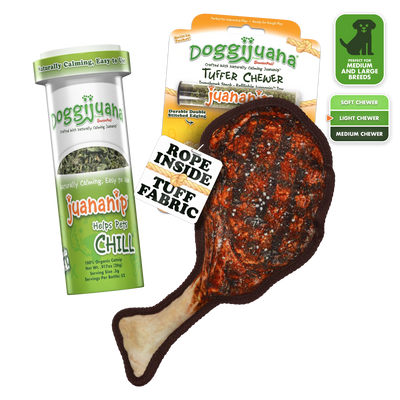
Tuffer Chewer Doggi Duo Bundle - Tomahawk Steak & Juananip
$ 19.99
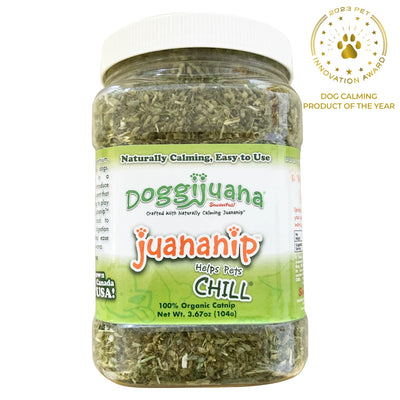
Tub container of Doggijuana® Juananip®, promoting a naturally calming effect for pets.
Juananip Refill Tub
$ 18.99

The doorway check

Four questions before the leash goes on. Click each one.

🌡️
What's the band?
45°F / freezing / 20°F are the lines
Above ~45°F: non-issue for nearly all dogs. 45 to freezing: fine for most, shorter for small, thin-coated, young, and senior dogs. Below freezing: real caution for the vulnerable groups. Below ~20°F: short and purposeful for every dog, no exceptions.
🐕
Which dog do you have?
Size, coat, wet, and acclimation shift the bands
Small and lean dogs lose heat fast; double coats are built for winter and short single coats aren't (a layer is equipment, not fashion). Wet plus wind drops every band a notch, and the season's first cold snap hits harder than the same temperature in February.
🛑
What are the stop signs?
Your dog votes mid-walk
Shivering, lifted paws, tucked tail, whining, slowing, or steering for home: the walk ends now. Afterward, de-ice the paws and rinse off sidewalk salt. Vet-call signs: shivering that won't stop indoors, lethargy, pale gums, or cold pale skin on ears, tail, or paws.
🏠
Skip day? Run the indoor plan
Brain work pays the energy bill
Ten minutes of treat hides out-tires a slushy march: scent games, a meal through the dispenser, and a chew session with fresh Juananip as the wind-down. The brain-games rotation covers multi-day cold snaps.

The bottom line

Above 45°F, walk; in the 20s-to-40s band, adjust for the dog you actually have; below 20°F, keep it short and purposeful for everyone; and when the answer is skip, the scent-work toolkit covers the energy bill indoors. A winter dog with a working skip-day plan gets through to March with pads, paws, and furniture intact, and the Doggijuana lineup stocks the indoor half.

Frequently asked questions

How cold is too cold to walk a dog? +
The commonly used guardrails: above 45°F is a non-issue for nearly all dogs; 45 to freezing calls for shorter outings for small, thin-coated, young, and senior dogs; below freezing those groups are into real-caution territory; and below about 20°F walks go short and purposeful for every dog, since frostbite and hypothermia stop being theoretical.
Do small dogs get cold faster than big dogs? +
Dramatically. Small and lean dogs lose body heat much faster, and coat type stacks on top: double-coated northern breeds are built for cold while short single coats are not. For a small or thin-coated dog, a winter layer is equipment, and every temperature band effectively shifts upward.
How do I know my dog is too cold on a walk? +
Shivering, lifting or alternating paws, a tucked tail and hunched posture, whining, slowing down, or steering for home all mean the walk ends now. Shivering that doesn't stop indoors, lethargy, pale gums, or skin that stays cold and pale (ears, tail, paws) are vet-call signs.
Is sidewalk salt bad for dogs' paws? +
Yes, and it causes more winter-walk trouble than the air temperature: ice-melt salt stings and cracks pads, and licking it off adds ingestion to the problem. Wipe or rinse paws after treated sidewalks, trim the fur between pads so ice balls can't form, and consider booties for dogs who tolerate them.
How do I exercise my dog when it's too cold to walk? +
Move the work indoors and make it mental: scent games and treat hides (ten minutes of nose work out-tires a short cold walk), a meal fed through a puzzle or treat dispenser, and a sustained chew session as the wind-down. Brain work tires dogs faster than leash miles, which is what makes skip days guilt-free.

The SmarterPaw Team

We're the team behind Doggijuana — found in 7,000+ retailers worldwide including PetSmart, Petco, and Walmart. Founded in 2015 in Lenexa, Kansas.

Share
← Back to Doggijuana Blogs & News

Leave a comment

Please note, comments need to be approved before they are published.