


Discover natural calming herbs for cats, including catnip, valerian root, and chamomile. Learn safe usage tips and holistic stress-relief techniques.
Quick answer: five herbs reliably calm anxious cats: catnip, valerian root, chamomile, passionflower, and lemongrass. About 30% of cats don't respond to catnip, but most of those engage with one of the other four. Below is what each one does, how to use it, and when to skip the herbs entirely.
What Causes Stress in Cats?
Cats, despite their independent and often aloof nature, are highly sensitive creatures. Their well-being is closely tied to their environment, and even minor changes can trigger stress. Common stressors for cats include changes in their surroundings, such as moving to a new home, rearranging furniture, or introducing new pets or family members. Loud noises, like thunderstorms, fireworks, or construction sounds, can also be overwhelming for cats. Additionally, a lack of stimulation or prolonged periods of isolation can lead to boredom-induced stress.
Stress in cats often manifests through noticeable behavioral changes. A stressed cat may hide more frequently, avoiding interaction with humans or other pets. Aggression, such as hissing, biting, or swatting, can also be a sign of anxiety. Other symptoms include excessive grooming, which may lead to bald patches, or a loss of appetite, which can result in weight loss. In some cases, stress may even cause inappropriate elimination, such as urinating outside the litter box. Recognizing these signs early is crucial to addressing the root cause and helping your feline friend feel secure and calm.
Why Use Natural Remedies for Cat Stress?
When it comes to managing stress in cats, natural remedies offer a gentle and holistic approach. Unlike synthetic medications, which can sometimes cause side effects like drowsiness or gastrointestinal upset, natural solutions are generally well-tolerated and less invasive. Herbs, in particular, have been used for centuries to promote relaxation and reduce anxiety in both humans and animals. They work by gently calming the nervous system without altering your cat's personality or energy levels.
However, it's essential to approach natural remedies with caution. Not all herbs are safe for cats, and improper use can lead to adverse effects. Consulting a veterinarian before introducing any new remedy is critical. A vet can help you determine the appropriate dosage and ensure that the herb won't interact with any existing medications or health conditions. By prioritizing your cat's safety and well-being, you can confidently explore natural solutions to help them navigate stressful situations.
Top Calming Herbs for Cats
1. Catnip
Catnip is perhaps the most well-known herb associated with cats, but its effects can vary widely. While many cats experience a burst of energy and playfulness when exposed to catnip, others find it calming and soothing. This dual effect is due to nepetalactone, a compound in catnip that interacts with a cat's olfactory receptors. For some cats, the initial excitement is followed by a period of relaxation, making it an excellent option for stress relief.
To use catnip effectively, moderation is key. Overexposure can lead to overstimulation, which may counteract its calming benefits. Offer catnip in small amounts, such as sprinkling dried leaves on a scratching post or using a catnip-infused toy. Keep in mind that not all cats respond to catnip; sensitivity to it is genetic, and about 30% of cats may not react at all. If you want the chemistry on how catnip itself works, our catnip guide covers the mechanism.
2. Valerian Root
Valerian root is another herb with a reputation for promoting relaxation, particularly in anxious cats. Unlike catnip, which can initially excite some cats, valerian root has a more direct calming effect. It works by stimulating the release of gamma-aminobutyric acid (GABA) in the brain, a neurotransmitter that helps reduce stress and promote a sense of calm.
You can offer valerian root to your cat in various forms, such as dried root, tea, or even as a stuffing for toys. Start with a small amount to gauge your cat's reaction, as some may find the scent overpowering. Always ensure the valerian root you use is free from additives or contaminants, as purity is crucial for your cat's safety. Our valerian root vs catnip post goes deeper on how the two herbs compare and which one fits which cat.
3. Chamomile
Chamomile is widely known for its soothing properties, making it a popular choice for reducing stress and anxiety in cats. This herb contains apigenin, a compound that binds to receptors in the brain to promote relaxation. Chamomile can also help with digestive issues, which are sometimes linked to stress.
To use chamomile safely, prepare a diluted tea by steeping a chamomile tea bag in hot water and allowing it to cool completely. You can then offer a small amount to your cat or use it as a spray to create a calming environment. Avoid using chamomile essential oils, as they can be too concentrated and potentially harmful to cats. Our chamomile for cats guide goes deeper on safe forms, dosing for tea versus blend versus loose dried, and how chamomile pairs with catnip in our calming lineup.
4. Passionflower
Passionflower is a lesser-known herb that can be highly effective in calming stressed or hyperactive cats. It works by increasing GABA levels in the brain, similar to valerian root, which helps reduce anxiety and promote relaxation. Passionflower is particularly useful for cats that exhibit signs of hyperactivity or restlessness.
This herb is typically available in dried form or as a tincture. If using a tincture, ensure it is alcohol-free, as alcohol can be toxic to cats. Start with a small dose and monitor your cat's response, gradually adjusting as needed. As with any herb, consult your veterinarian before introducing passionflower to your cat's routine.
5. Lemongrass
Lemongrass is not only a fragrant herb but also a natural stress reliever for cats. Its calming aroma can help create a peaceful environment, making it an excellent choice for households with multiple pets or frequent visitors. Lemongrass can also double as a natural insect repellent, providing additional benefits.
One of the safest ways to use lemongrass is through an essential oil diffuser. However, it's crucial to use pet-safe essential oils and ensure the diffuser is placed in a well-ventilated area where your cat can leave if they find the scent overwhelming. Avoid applying lemongrass oil directly to your cat's fur or skin, as this can cause irritation.
How to Safely Use Calming Herbs for Cats
Introducing calming herbs to your cat's routine requires careful planning and observation. Start with small amounts to see how your cat reacts, as individual sensitivities can vary. Always use high-quality, pet-safe products, and avoid herbs that are not specifically labeled for feline use. For example, some herbs that are safe for humans, like garlic or onion, are toxic to cats.
Monitor your cat closely for any signs of adverse reactions, such as vomiting, diarrhea, or lethargy. If you notice any of these symptoms, discontinue use immediately and consult your veterinarian. Additionally, avoid combining multiple herbs without professional guidance, as this can increase the risk of interactions or side effects.
How much of each herb is safe? Dosing for the 5 calming herbs
The right amount varies by herb. Catnip is forgiving. Valerian needs more care because of its intensity. Chamomile is the gentlest of the bunch. Here's a practical reference for each.
Catnip. A pinch to 1/8 cup of dried catnip in a serving is plenty for any cat. Offer a few times a week, not daily. Daily use dulls the response, which is exactly what you don't want with anxious cats who need an effective calming tool. Calming-side blends like Whisker Tickler pair catnip with a small amount of chamomile, so the catnip does most of the work and the chamomile supports the come-down.
Valerian root. Less is more. A small pinch sprinkled on a toy or kicker pillow is enough to trigger the response. A few times a week is the upper bound. Daily exposure dulls the response in sensitive cats. Loose dried valerian by itself feels strong; in a blend it's more balanced. Kalico Kush is our valerian-forward blend, with the herb kept well below the 2% safe-formulation ceiling.
Chamomile. The gentlest of the five. In a calming catnip blend, chamomile is kept well below the 2% safe-formulation ceiling. That works out to less than a pinch per serving. For plain brewed chamomile tea (cooled, no additives), a teaspoon or two offered occasionally is fine. Most cats won't drink tea though.
Passionflower. Use only in trace amounts as a supporting ingredient in a multi-herb blend. Don't use human passionflower supplements (the dosing math doesn't translate). Don't use alcohol-based tinctures (alcohol is toxic to cats). Mice Dreams and Pawty Mix include passionflower at supportive levels.
Lemongrass. Use sparingly. The dried form in a calming blend is fine in trace amounts. Avoid lemongrass essential oil entirely (too concentrated for cats). If you diffuse lemongrass oil for the household, make sure your cat can leave the room.
For all five herbs, the general principle is the same: less is more, a few times a week is the ceiling, and the dried form in a formulated blend is safer than any concentrated extract.
Calming catnip blends with the 5 herbs
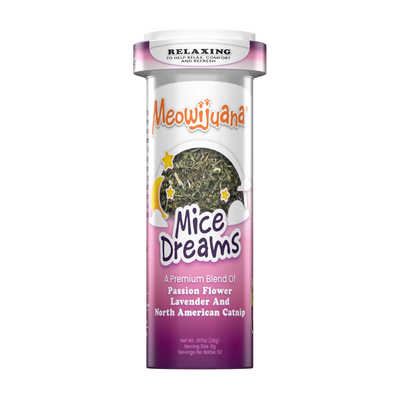


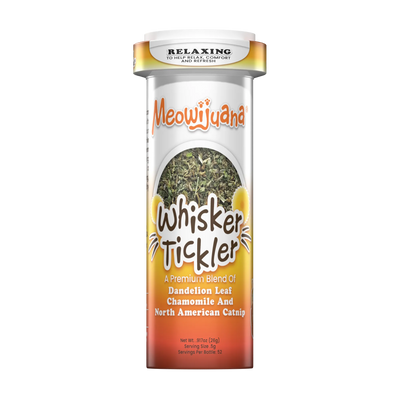
You can also browse the full lineup of calming, stimulating, and hybrid blends to see which fits your cat's profile.
Other Natural Stress-Relief Techniques to Complement Herbs
While herbs can be highly effective, they work best when combined with other stress-relief strategies. Creating a quiet, safe space for your cat is one of the simplest ways to reduce anxiety. This could be a cozy corner with a soft bed, toys, and access to food and water. Pheromone diffusers, which mimic natural calming signals, can also help create a soothing environment.
Interactive play is another excellent way to alleviate stress. Engaging your cat with toys, such as feather wands or laser pointers, provides mental stimulation and helps release pent-up energy. Regular routines, including consistent feeding times and play sessions, can also provide a sense of stability and security.
If your cat doesn't respond to catnip, our silvervine sticks guide covers a different calming option. About 80% of cats respond to silvervine, including most catnip non-responders, which makes it the most reliable fallback for cats in the catnip-immune 30%.
Signs That Your Cat May Need Professional Help
While natural remedies and stress-relief techniques can be highly effective, some situations may require professional intervention. Persistent behavioral changes, such as ongoing aggression, hiding, or loss of appetite, are red flags that should not be ignored. Physical symptoms, like vomiting, diarrhea, or excessive weight loss, may also indicate underlying health issues.
If your cat's stress does not improve despite your efforts, consult a veterinarian or a feline behaviorist. They can help identify the root cause of the stress and recommend a tailored treatment plan, which may include behavioral therapy or medication.
Final Tips for Keeping Your Cat Calm and Happy
Maintaining a calm and happy environment for your cat involves a combination of strategies. Prioritize a stable environment with minimal disruptions, and establish regular routines to provide a sense of security. Use natural remedies, such as calming herbs, responsibly and in consultation with your veterinarian. Complement these remedies with other techniques, like creating a quiet space and engaging in interactive play, to address your cat's needs holistically.
By taking a proactive approach to your cat's well-being, you can help them navigate life's challenges with confidence and ease. A calm cat is a happy cat, and your efforts will strengthen the bond you share with your feline companion.


