


Every toy gets called "interactive" in the marketing. In practice, most of them require nothing from the cat except to notice the toy exists. A genuinely interactive toy creates a response loop: something happens, the cat reacts, the toy responds to that reaction, and the cycle continues. That distinction matters a lot when you're trying to figure out why your cat ignores most of what you buy.
There are four toy formats that reliably create that loop. Each covers a different phase of the hunt sequence, and a cat with access to all four has its prey drive fully engaged — which is where the settled, contented behavior comes from.
What "interactive" actually means for a cat
Cats have a hardwired prey sequence: spot, stalk, chase, catch, bite and kick, then reward. Passive toys — a ball, a stuffed mouse, anything that just sits there — might trigger one or two phases before the cat loses interest. A truly interactive toy keeps the sequence moving.
The other thing that separates interactive from passive is sensory engagement. The best interactive toys activate at least two senses simultaneously: movement plus scent, or motion plus sound, or tactile feedback plus catnip response. Single-sense toys are easier to habituate to. Multi-sense toys hold attention longer.
Format 1: Teasers and wand toys
Teaser toys are the highest-engagement format because you control the motion. The lure moves unpredictably, changes direction, speeds up and slows down. That's not something a static toy can do. A cat that has ignored every plush toy in the house will often go completely into hunt mode within 60 seconds of a well-run teaser session.
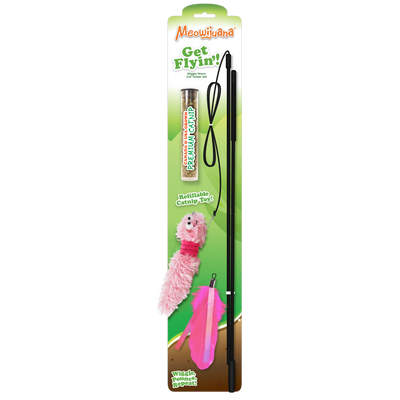
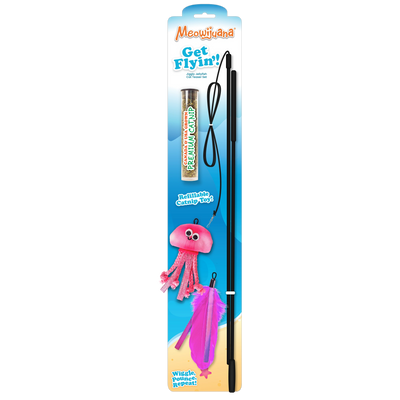
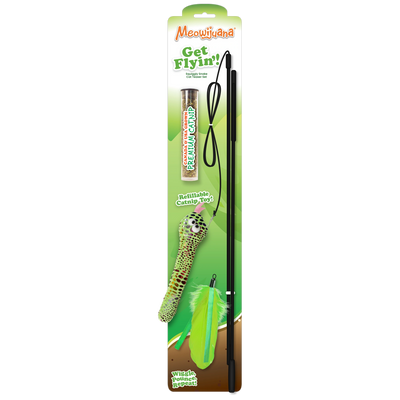
The Get Flying! Teaser line has interchangeable lures and a refillable plush body. The catnip pocket in the lure keeps scent present throughout the session, which is what separates it from a plain feather wand. The cat isn't just chasing movement — it's chasing a prey signal.
How you run it matters as much as what you use. Keep the lure low to the ground most of the time (prey runs, it doesn't fly). Let it "hide" behind furniture edges and reappear. Vary the speed. And most importantly: let the cat catch it. A cat that never catches anything during a session develops frustrated play behavior over time. End every session with a definitive catch, then offer a small food reward to complete the prey sequence.
Teasers and Wand Toys

Format 2: Kicker toys
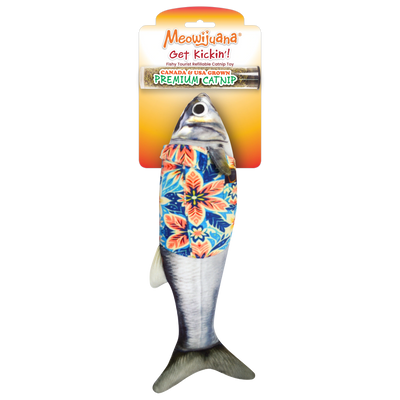
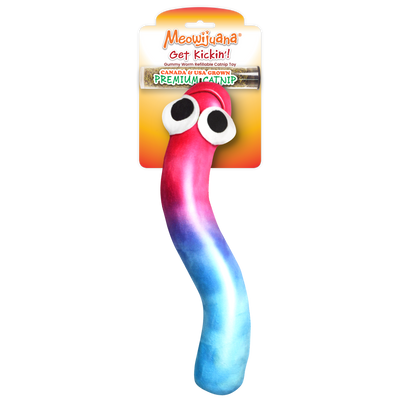
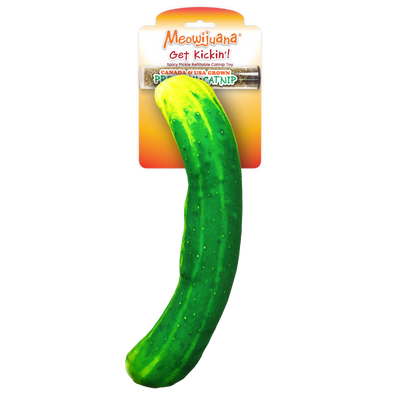
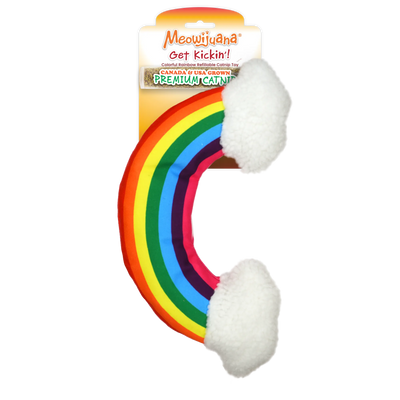
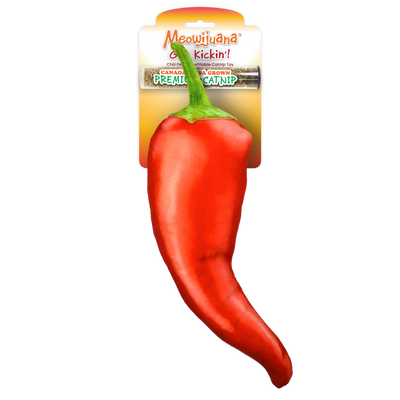
Kickers are interactive without requiring you to hold anything. The long body shape triggers the bunny-kick reflex — front paws grab the toy, back legs rake rapidly. That's a complete physical engagement that passive bat-and-ignore toys don't produce.
The Get Kickin' line is sized for the full wrestling hold, with a refillable catnip pocket that keeps the engagement active over multiple sessions. A cat can take a kicker to another room, work it for five minutes, and come back for more. That self-directed play is what you want — the cat is running its own prey sequence without any input from you.
Kickers are also good for cats that get overstimulated during teaser sessions and start redirecting to hands. The kicker gives that big-grab, bite-and-kick impulse a sanctioned target.
Kicker Toys
Format 3: Jump n Jamb door-frame toys
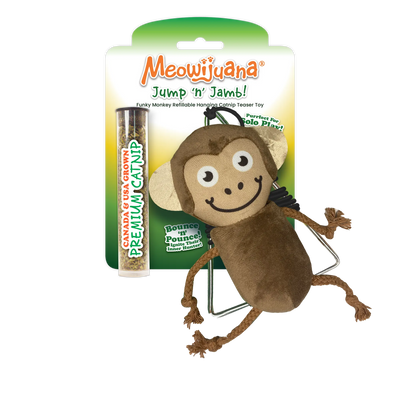
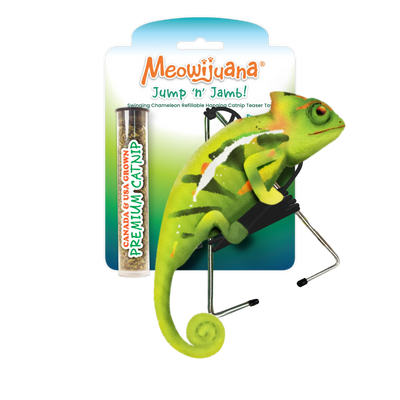
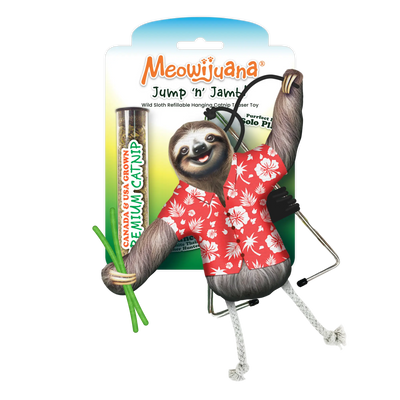
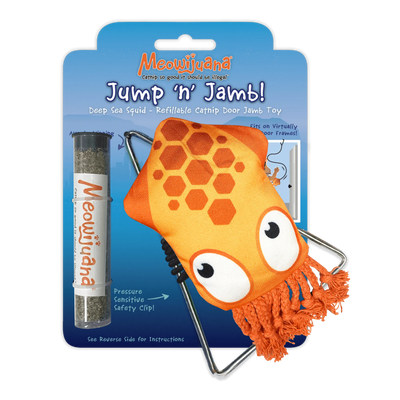
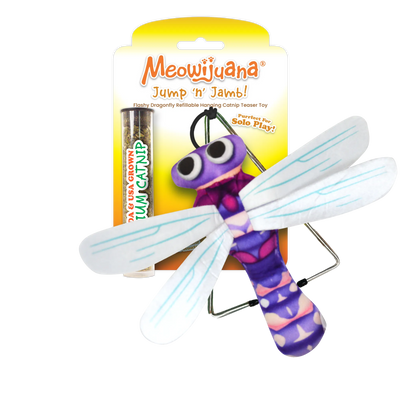
Jump n Jambs mount in a doorframe and use an elastic cord with a break-away clip. After each bat, the toy springs back — creating the kind of reset motion that keeps a cat engaged far longer than a toy that just sits on the floor after a swipe.
The format covers something teasers and kickers don't: height play and aerial targeting. Cats that are climbers, that leap at things, or that get excited by prey moving upward rather than along the floor get a lot out of the jamb format that wand sessions don't provide.
The Jump n Jamb Monkey has a refillable pocket and hangs at an adjustable height. Set it at chest level for younger, more agile cats. Raise it slightly for cats that prefer the full leap.
Door-Frame Play
Format 4: Puzzle and treat dispensers
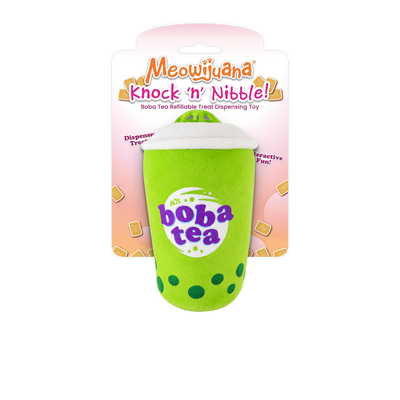
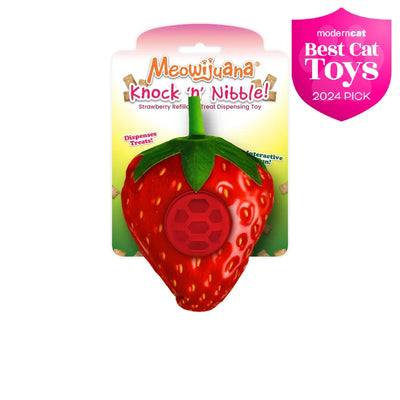
Not every cat is a high-energy sprinter. For cats that prefer thinking to running, or as a supplement to physical play, treat dispensers offer a different kind of engagement: figure out how to get the reward.
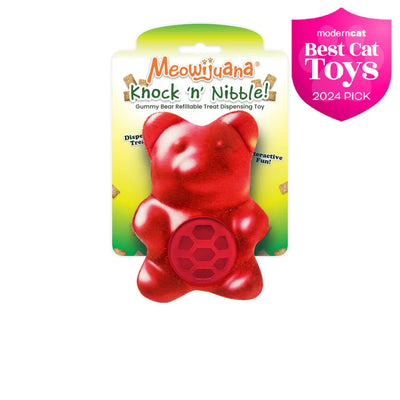
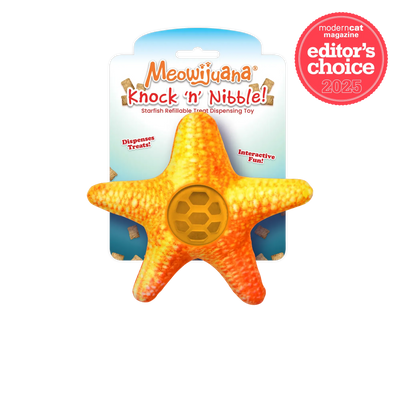
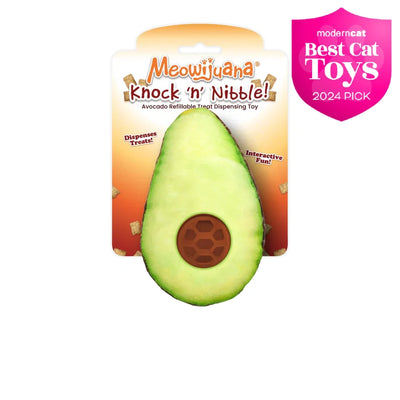
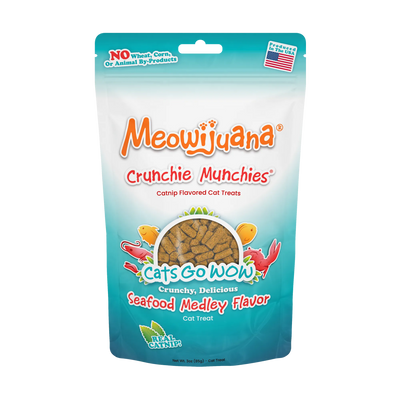
The Knock 'n' Nibble dispenser (Gummy Bear shape) takes Meowijuana treats. Set it on the easiest difficulty first — a cat that can't extract anything in the first minute abandons the toy entirely. Build difficulty gradually as the cat figures out the mechanism.
Mental engagement tires some cats faster than physical play, and the settled calm after a puzzle session tends to last longer than the calm after a sprint. For cats that seem physically tired but still restless, puzzle play is often the missing piece.
Puzzle and Treat Dispensers
Play Personality
What Kind of Hunter Is Your Cat?
Pick the description that fits best. Get a toy format match.
When your cat plays, which behavior do you see most?
Matching format to your cat's play personality
Stalker types — cats that sit and wait, creep slowly, and pounce — do best with teasers and jambs where they can set up before the attack. Wrestler types — cats that grab first and ask questions later — tend to favor kickers. Problem-solvers gravitate toward puzzle toys. Most cats are a mix, which is why a full kit has something from each category.
Catnip is the activation layer across all of them. A dry kicker gets ignored. A kicker with fresh Meowijuana blend in the pocket gets worked for 20 minutes. The Catnip and Silvervine Spray is the fastest way to re-engage a toy that's losing interest — mist it before a session and the scent resets.
Silvervine is worth having alongside catnip if your cat's response seems to be weakening. It activates a different receptor set, so a cat that's partially habituated to catnip will often respond strongly to silvervine. The silvervine guide covers the response differences in detail if you want to understand exactly what's happening.
How-to Guide
How to Run a Complete Play Session
Warm-Up: Trigger the Hunt Mode
The first 2-3 minutes should build interest, not spike it immediately. Move the lure slowly — low to the ground, small twitches, occasional stillness. Let the cat stalk before they chase.
Catnip spray on the lure before you start gives the cat a scent target from the first second of the session.
Peak: Full Chase and Catch Attempts
5-10 minutes of real engagement — fast movement, direction changes, the lure "escaping." This is where the energy burn happens. The cat should be sprinting, leaping, and missing occasionally.
A cat that's panting lightly or lying flat between chase attempts is fully engaged — that's the target state. Not exhausted, but genuinely working.
Wind-Down: The Catch and Reward
The most skipped part. Cats that never catch anything during a session stay activated — looking for something else to complete the sequence. A deliberate ending is what triggers genuine settling.
A cat that finishes a session with a catch and a meal reward almost always settles within 10 minutes. That's the prey sequence completing as designed.
Building a daily routine that covers all four formats
The goal is two structured sessions per day — one in the morning, one in the evening — plus passive solo coverage between them.
Morning: teaser or jamb, 10-15 minutes, high energy. End with a catch and a treat reward.
Evening: kicker or puzzle, slower intensity, clear wind-down. A cat that finishes the evening session with a food reward and settles immediately is one whose prey sequence is completing properly.
Solo toys (kickers, plush with filled pockets) cover the rest of the day without your involvement. Rotate which toys are out so they don't become invisible through familiarity. The indoor enrichment guide goes deeper on structuring the full day if you want a more complete framework.


