


Every coat in the personality series carries some kind of story, but the tuxedo arrives with an entire wardrobe: the white chest, the white paws, the permanent air of being slightly better dressed than everyone else in the house. The reputation followed the outfit, because of course it did. Tuxedos are supposed to be the clever ones, the talkative ones, the cats running long cons from the back of the couch. Here's what the suit actually is, where the rumors come from, and what any of it tells you about the cat wearing it.
What makes a tuxedo a tuxedo
Start with the surprise: a tuxedo isn't a color, and it definitely isn't a breed. It's a pattern, and underneath the pattern, most tuxedos are genetically black cats. The suit comes from a white-spotting gene, the same gene family that turns a tortoiseshell into a calico, switching pigment off entirely in patches. At low grades the white shows up exactly where the pattern's name promises: the chest, the paws, sometimes the chin and belly, as if someone laid formalwear over a black coat and called it a day. And unlike the calico and tortie coats, nothing about it is sex-linked: white spotting rides an ordinary chromosome, so tuxedo boys and tuxedo girls turn up in equal numbers. The suit is an equal-opportunity employer.
The smartest-cat rumor
The tuxedo's folklore is specific: supposedly the most intelligent coat in the species, with claims floating around the internet of tuxedos being dramatically smarter than other cats. The honest read is shorter than the rumor: no study has ever ranked coat patterns by intelligence, and the only research in the coat-personality space is owner-perception surveys, with all the usual caveats (modest signals, people describing their own cats, reputations feeding the reports). What the tuxedo really has is the best costume in the business. A cat that looks like it dressed for dinner reads as a schemer before it does a single thing, and every clever move afterward confirms the story. Owners do consistently describe tuxedos as talkative, social, and a little dog-like in their people-following, which is a real pattern of reports, just not a diploma.
The celebrity résumé
Where the calico collected luck, the tuxedo collected screen credits. Felix the Cat, one of the first animated stars of any kind, wore the suit. Sylvester spent decades chasing Tweety in it. Socks ran the Clinton White House in it, possibly the most photographed cat of the 1990s. And Mr. Mistoffelees, the magical cat of the stage, is written as a tuxedo. No coat has a longer entertainment career, and it isn't a coincidence: the suit photographs like a character design that was already finished. None of it predicts temperament, but if reputations were inherited like genes, the tuxedo's would be "comic timing."
Tuxedo vs orange: the comparison people search
The two reputations are written as opposites: the orange cat is the beloved chaos agent who shares one brain cell with every other orange cat, while the tuxedo is the composed one watching the chaos from the armchair and taking notes. The demographics behind them differ too. Orange runs heavily male, which likely feeds its bold, friendly reputation; tuxedo splits evenly down the middle, so its folklore can't lean on a sex skew at all. As always in this series, the gap between the two reputations is much bigger than any gap the research can find, and one week of watching your actual cat outranks both stories.
Playing to the tuxedo profile
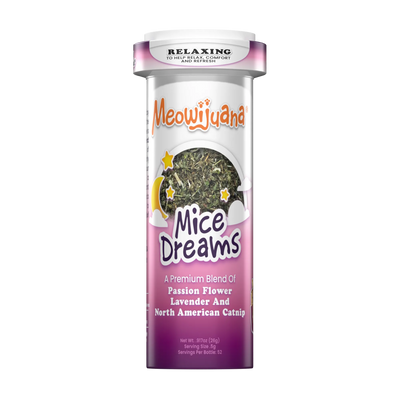
If your tuxedo runs to type, the sessions that land are the thinking-cat kind: stalks with setup, prey that hides and re-emerges, puzzles before pounces. The hybrid lane fits that profile, with Meowi Waui and Cloud 9 giving the playful focus without the full rocket launch, and Mice Dreams covering the lap-tuxedos whose favorite scheme is a nap. Since most tuxedos are black cats under the suit, the black cat profile is the other half of their file, and the blend-by-personality guide sorts the lineup by the cat you actually live with, whatever they're wearing.
For the Formally Dressed


So what does the suit tell you?
That your cat is probably a black cat in formalwear (genetically), could be either sex (evenly), and owns the best filmography of any pattern (verifiably). On intelligence and personality it tells you where the stories start, which is the running verdict of the whole coat-color personality guide: the coat opens the conversation, the cat finishes it. Whoever yours turns out to be, the blend lineup runs from mellow to maximum, and somewhere in it is the one that matches the cat under the tie. Tabby readers, your edition is here.


