


Every dog owner knows the walk math: skip one and the evening gets chaotic. But there's a second energy account most routines never touch, and it drains faster than the physical one. Ten minutes of genuine mental work leaves most dogs more settled than a walk three times as long. Brain games are how you make that deposit, they need almost no equipment, and they work in a studio apartment in a thunderstorm.
Why thinking tires a dog out
Problem-solving is expensive. When a dog works out which hand holds the treat, tracks a scent across a room, or learns a new word, they're running focused attention, which is the most demanding thing a brain does. That's why scent work tires dogs so efficiently, and it's why the signs of a bored dog (destruction, pacing, the 9pm crazies) respond better to brain work than to more mileage. If your dog shows those signs, the mental stimulation guide covers the diagnosis; this post is the prescription.
The games below run from easiest to hardest. Start at the level your dog wins, and move up when winning gets fast.
The seven games
1. Which hand. Treat in one fist, both fists out, dog picks. A nose bump or paw on the right hand wins the treat; wrong hand means show and reset. Thirty seconds, zero setup, and it teaches deliberate choice. The perfect TV-commercial-break game.
2. The cup shuffle. Three cups, treat under one, shuffle slowly while the dog watches, then release. Most dogs start by picking with their eyes and graduate to using their nose, which is exactly the upgrade you want to see.
3. Find it, scattered. Toss a handful of kibble across the yard or a textured rug with your search cue. The dog's nose does the collecting. This one doubles as a slow feeder and is the on-ramp to real scent work.
4. The name game. Dogs can learn dozens of object names. Start with one favorite toy, name it every time it comes out, then ask them to pick it from a lineup of two, then three. Learning vocabulary is heavyweight mental work dressed up as fetch.
5. The new-trick rep. Five minutes on anything they don't know yet: spin, back up, chin rest, roll over. The trick doesn't matter; the learning state does. A dog mid-learning is a dog spending maximum mental energy.
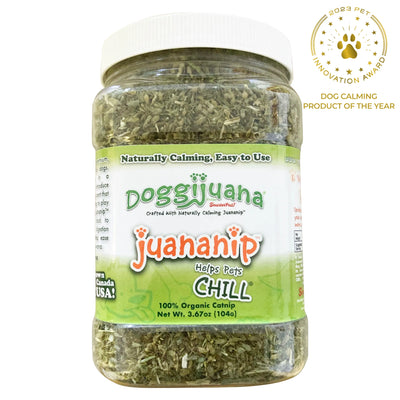
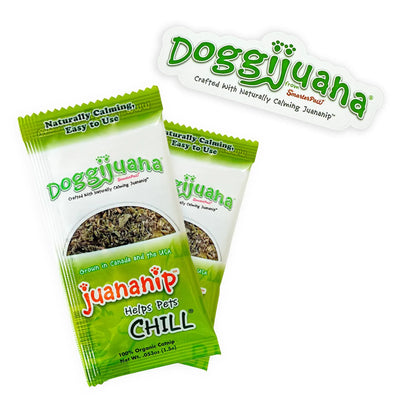
6. Room hides. Shut the dog out, hide treats or a pinch of Juananip around one room (chair legs, blanket folds, low shelves), release, and let them clear it. This is the scent-work core, and the difficulty ceiling is as high as your hiding spots. The scent exercise guide has the full progression from first hide to cold hides.
7. The puzzle dinner. Retire the food bowl a few nights a week and serve dinner through a puzzle or a scent-driven toy instead. Eating becomes a twenty-minute project, and our puzzle toys guide ranks the difficulty options.
Where Juananip raises the stakes
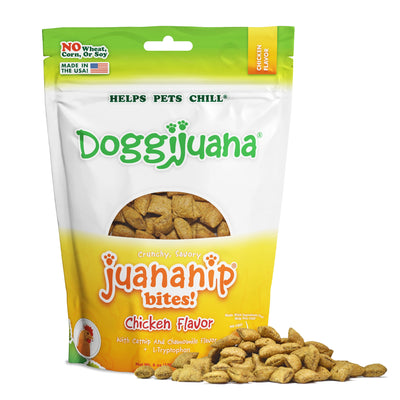
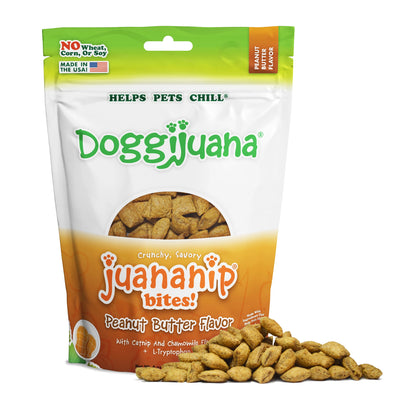
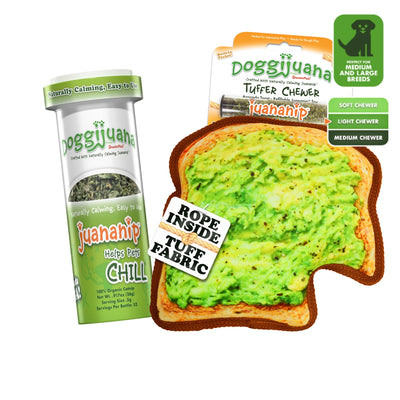
Games 3, 6, and 7 all run on scent, and the scent decides how motivating the game is. A pinch of Juananip in a room hide gives the dog a distinct, high-interest target odor that holds a search together, and a Tuffer Chewer with Juananip in the mix makes the post-game wind-down its own activity. Juananip Bites work as the find reward: the hunt ends in something worth hunting for, which is what keeps a dog coming back to the game tomorrow.
The Brain Game Kit
Building brain games into the week
The realistic prescription: one short game daily, not a marathon on Sunday. Which-hand or a cup shuffle costs two minutes on busy days. Room hides and puzzle dinners are the ten-minute versions for evenings when the dog has extra to spend, and they pair perfectly with the pre-bed wind-down: game, chew, sleep.
Watch what changes in the second week. The classic report is a dog that settles earlier in the evening, destroys less, and starts offering focus you didn't ask for, because focus is now a game that pays. Physical exercise keeps the body right; this is the other half. The Juananip lineup covers every scent-driven game on this list.


