


Why summer is the hardest season for noise-anxious dogs
For most of the year, a noise-reactive dog has the occasional bad night — a thunderstorm here, a distant siren there. Then summer arrives, and it's weeks of fireworks: the build-up to Independence Day, the night itself, the days after, plus weekend backyard celebrations. Add in thunderstorm season and you're looking at six to eight weeks of compounded stress.
Dogs that handle a single bad event often struggle when the events stack up. Stress is cumulative — the body doesn't fully recover between fireworks shows, and by mid-July, an otherwise resilient dog can be in chronic low-grade anxiety. The good news: with two weeks of preparation, most dogs handle the season much better than they would with no plan at all.
This is a step-by-step guide built around a realistic timeline and the Doggijuana® calming products designed for exactly this situation. If you're reading this in May or June, you have time to do this properly. If you're reading it the week before July 4, scroll to the compressed plan.
How noise anxiety actually works in dogs
A loud, unpredictable sound triggers the same fight-or-flight response in dogs that it does in humans — adrenaline, elevated heart rate, the urge to escape or hide. The difference is that dogs can't reason their way through it. They don't know fireworks end at 10 PM. They don't know thunder is harmless. From their perspective, the world is sometimes loud and dangerous for no understandable reason.
What separates a mild reactor from a severe one is mostly about thresholds. A mild dog feels the stress, manages it, and recovers quickly. A severe dog goes past the threshold where the rational brain can intervene at all — they're running on pure panic, which is why severe-anxiety dogs sometimes hurt themselves trying to escape.
Three things help across all severity levels:
- Environment — a place that feels safe to retreat to before the stress hits
- Familiar scent and routine — anchors the dog's nervous system to baseline calm
- Calming support — natural compounds (chamomile, passion flower) that work with the dog's biology to take the edge off
The plan below uses all three.
The Doggijuana calming approach
Doggijuana® makes two product lines that matter for noise anxiety:
- Juananip® with Chamomile and Passion Flower — a refillable Juananip® variant blended with chamomile and passion flower, the two herbs most associated with calming in dogs. Used daily in a refillable chew toy, it builds a baseline of calm scent exposure your dog associates with normal life. By the time fireworks night arrives, the scent is familiar and reassuring.
- Juananip® Bites — soft chews in peanut butter and chicken flavor. Used as event-day treats about 60-90 minutes before fireworks start, they deliver Juananip® in a higher-engagement format that gives anxious dogs something positive to focus on as the noise builds.
These aren't sedatives. They don't knock a dog out. They support a calmer baseline so the noise doesn't push your dog as far past their stress threshold. For mild and moderate anxiety, that's usually enough. For severe anxiety, they're part of a layered approach that may also include prescription support from your vet.
What to do the day of an event
Even with a full 14-day prep behind you, the day of a major fireworks event has its own rhythm. Here's what works:
Morning: tire them out. A long walk before the neighborhood comes alive. Bonus points if you can fit in a play session that requires real focus — fetch, training, or anything that demands mental work. Physical and mental tiredness both help dogs settle.
Afternoon: keep it normal. Don't over-cuddle, don't act differently. Dogs read owner energy. If you're behaving like something bad is about to happen, your dog learns that something bad is about to happen.
60-90 minutes before fireworks start: Juananip® Bites. One or two depending on dog size. This is also when to turn on white noise, close the curtains, and make sure the safe-den space is set up with water and familiar bedding.
As fireworks start: stay calm yourself, and let your dog decide where they want to be. Some dogs want to be near their human; some want to be in the den. Either is fine. Don't drag them out of the den to comfort them — the retreat space is doing exactly what it's supposed to.
During the worst of it: if your dog is moderately anxious and the event is running long (think 90+ minutes of constant booms), one additional Juananip® Bite mid-event is reasonable. For severe-anxiety dogs, a second dose isn't typically the answer — at that severity level, what helps is what's already in place from the 14-day prep.
Avoid: opening doors during the event (escape risk), pushing your dog to interact with the noise (sensitization, not desensitization), or punishing anxious behavior (makes the next event worse).
When the booms start: real-time calming
When the noise is actively happening, the goal shifts from prevention to support. Three tactics that consistently help:
- Stay close, stay calm. Sit on the floor near your dog's safe space. Read, watch TV, work — anything that signals "this is a normal evening." Your nervous system is your dog's reference point.
- Engage the nose, not the ears. A chew toy loaded with Juananip® with Chamomile and Passion Flower gives anxious dogs an active alternative to focusing on the booms. Chewing is itself a calming behavior for dogs.
- Skip the verbal reassurance. Cooing "it's okay, sweetie" in a worried tone teaches your dog that something IS wrong. Normal voice, normal behavior, normal interactions are more reassuring than soothing.
For dogs that are pacing or hiding but not in active panic, this combination is usually enough. For dogs that are in active panic — trembling, refusing food, trying to escape — work the signal checker below to figure out whether you're in vet-conversation territory.
When to talk to your vet
Natural calming products help most noise-anxious dogs, but they aren't a complete solution for the most severe cases. Three signs your dog needs more than a calming protocol:
- Destructive escape behavior. Dogs that chew doors, claw at windows, or break out of crates during fireworks are in panic-level distress. A short-term prescription option for peak nights is worth the conversation.
- Loss of bladder or bowel control. This is a physiological panic response. The protocol still helps but probably isn't enough on its own.
- Cumulative escalation year over year. If your dog's reactivity is getting worse each summer despite your efforts, that's a sign the protocol needs medical support, not more treats.
A vet visit doesn't replace the natural calming protocol — it adds to it. The Juananip® Chamomile and Passion Flower blend daily, the safe-den setup, the timed Bites — all of that still applies. Prescription support during peak events is the layer on top, not the replacement.
For more on recognizing dog anxiety in general, our guide on the signs of dog anxiety goes into detail on what to watch for beyond the noise-specific symptoms.
Our calming picks for fireworks season
Daily calming blend
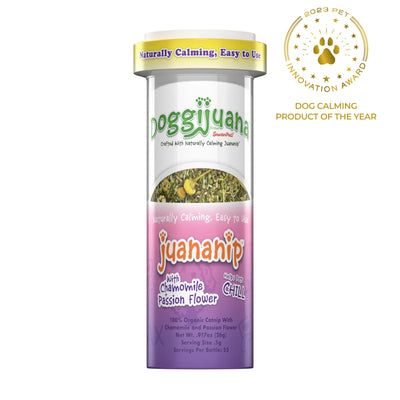
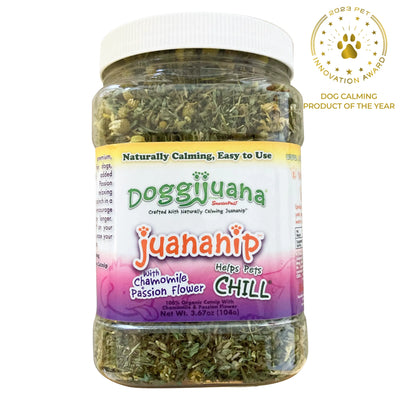
The chamomile and passion flower Juananip® variant is the central tool for fireworks season. Refill bottle for households trying it for the first time, larger tub for active-use households with bigger dogs or multiple dogs.
Event-day treats

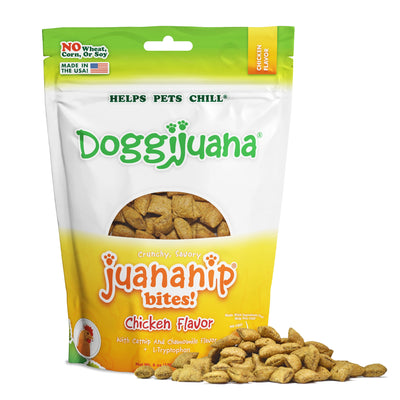

Juananip® Bites are the day-of intervention — about 60-90 minutes before fireworks start. The Duo Pack is the most efficient way to stock both flavors if you don't know which one your dog prefers yet.
Untested? Start here
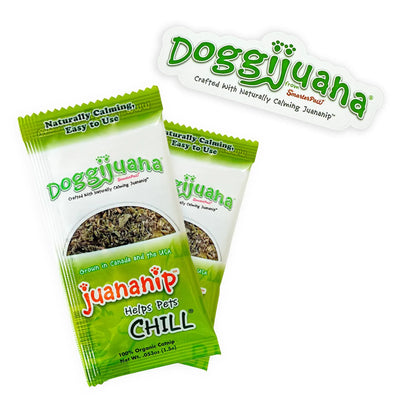
The Trial Pack is the cheapest way to find out if your dog responds to Juananip® at all. At $0.99 it's a near-zero-risk test — if it works, great, move to the chamomile blend; if not, you've spent a dollar to learn.
After the storm: recovery and reset
A noise-anxious dog doesn't bounce back instantly from a hard event. Recovery is part of the protocol — and it's the step most owners skip.
The day after a major fireworks night:
- Quiet day. No new people in the house, no high-stimulation activities, no other big noise events if you can avoid them.
- Normal routine. Same walks, same meals, same bedtime — predictability is regulating.
- One more dose of the chamomile blend in their toy — keeps the baseline calm familiar for the next 24 hours while the nervous system resets.
For dogs that had a particularly rough night, two or three days of low-key recovery before introducing any new stressors is reasonable. The goal is to keep stress from compounding event to event across the season.
When summer ends
Once Labor Day passes and fireworks taper off, you can step down the daily Juananip® with Chamomile and Passion Flower use. Many owners keep a smaller weekly exposure going year-round because the scent association with calm is genuinely useful, but daily isn't necessary outside of fireworks/storm season.
If New Year's Eve is also a problem at your house, the same 14-day plan works — start two weeks before, set up the safe den, time the Bites correctly. Our New Year's calming guide walks through the seasonal differences in detail.
The bottom line
Most noise-anxious dogs can have a meaningfully better summer with two weeks of intentional prep. The protocol isn't complicated — daily scent exposure to a calming blend, a safe-den setup, sound desensitization, and Juananip® Bites timed correctly on event days.
What it requires is starting on time. Two weeks before is the ideal window. One week before still helps. The day of is too late for the full effect, but even then, the right environment and a well-timed treat takes the edge off.
For deeper Doggijuana® context, our guide to what Juananip® is and how it works covers the science of how the blend supports a calmer dog. And the Doggijuana calm-an-anxious-dog hub is the one-stop overview of every calming tool we make.


