


One second your dog is calm, the next they're tearing laps around the couch with their rear tucked and their eyes wild. Then, as suddenly as it started, it's over. Every dog owner has watched this happen, usually at 9pm or right after a bath, and wondered what exactly just fired in their dog's brain. It has a name, a set of predictable triggers, and a right way to handle it.
The technical name is FRAP
Behaviorists call zoomies Frenetic Random Activity Periods, or FRAPs. They're a normal, healthy burst of energy release seen in most dogs (and cats, and plenty of other animals). During a FRAP, the dog isn't out of control in a worrying sense. It's a pressure valve: accumulated energy and arousal discharging in one short, intense sprint session, usually lasting under a few minutes and ending with a happy, panting dog.
Zoomies are most common in puppies and young dogs, and they get less frequent with age. A senior dog that suddenly starts zooming after years without it is worth mentioning to your vet, but for most dogs, FRAPs are simply part of being a dog.
Why zoomies happen when they happen
The timing isn't random, even if the running is. Zoomies cluster around arousal transitions, moments where your dog's excitement or stress level changes sharply:
After a bath. The classic. Baths are mildly stressful for most dogs, and the moment they're free, the built-up tension discharges as a sprint. The wet-dog-shaking-then-zooming sequence is a stress release, not an objection to being clean.
The evening witching hour. The 8-to-10pm zoomies show up in dogs whose day didn't spend enough energy. The body budgeted for more activity than it got, and the surplus comes out before wind-down.
After confinement or a long alone stretch. Crate time, a workday alone, a long car ride: any stretch of low activity builds the pressure that a FRAP releases.
After the poop. Genuinely common, genuinely normal. Relief plus arousal transition equals victory laps.
Are zoomies good or bad?
The zoomies themselves are healthy. The only real risks are environmental: slick floors, stairs, sharp table corners, or an open gate. When a FRAP hits, the best response is to give them room. Clear a path, open the door to a safer running space if you have one, and let it finish. Don't chase, since chasing reads as joining the game and extends it, and don't punish, since there's nothing being done wrong.
The useful signal is frequency. Occasional zoomies are normal in any dog. Daily, intense zoomies, especially the evening kind, are your dog telling you the day's exercise and mental work aren't covering their budget. The FRAP is the overflow. That's not a behavior problem; it's an audit finding.
Channeling the energy before it overflows
If the evening zoomies are a nightly event, the fix isn't stopping the sprint, it's spending the energy earlier and smarter. Physical exercise helps, but the bigger lever for most dogs is mental work, which drains the tank faster than leg work alone.
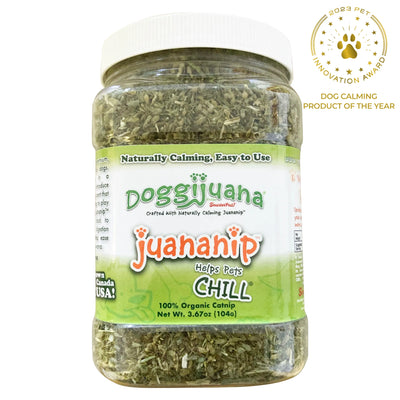
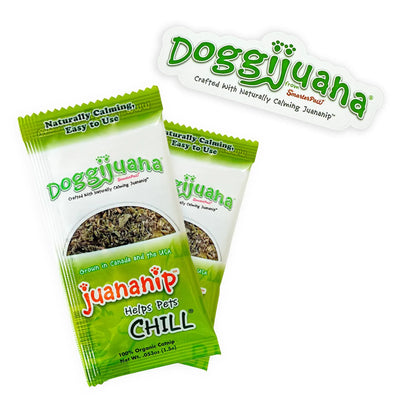
Scent work is the most efficient option: a focused sniffing session works your dog's brain harder than a walk twice as long, and it settles rather than winds up. Our guide on why scent is such good exercise covers the full method, but the short version is a pre-evening scent session, using a high-interest scent like Juananip for hides, followed by a chew session. The search spends the mental energy, the chew handles the wind-down, and the 9pm sprint often just stops appearing.
A scent-driven chew toy does double duty here. A Tuffer Chewer with Juananip in the mix gives the evening dog a settling activity that engages the nose and jaw at once, which is exactly the energy path you want after dinner.
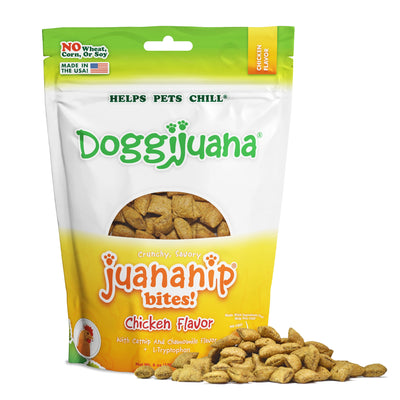
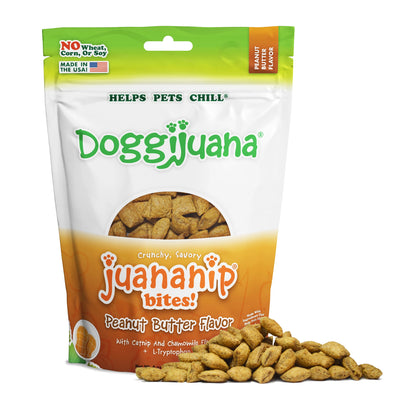
The Evening Wind-Down Kit


When zoomies are a message
A few patterns worth acting on rather than laughing off:
Zoomies every single evening mean the daily routine is under-spending energy. Add a scent session or upgrade a walk to a sniff walk before assuming you need more mileage. The mental stimulation guide covers the signs of an under-worked brain and how to fill the gap.
Zoomies with no off switch, where the dog can't settle even after the sprint, point toward overarousal rather than energy release. Slow everything down: calmer play, more chew time, more predictable routine.
New zoomies in an older dog, or sprints that end in stiffness or limping, are vet conversations. FRAPs are normal; sudden behavior changes are data.
For the everyday version, though, the answer is simpler: enjoy the show, clear the runway, and spend a little more of the budget before it spends itself. The Juananip lineup covers the scent side, and ten minutes of nose work a day buys a lot of calm evenings.


