


Most dog exercise plans are built entirely around the legs: walks, fetch, the dog park. But the most powerful piece of equipment your dog owns is the nose, and for most dogs it barely gets used. A dog processing scent is doing real cognitive work, and working the nose produces a kind of tired that leg exercise alone can't reach. If your dog finishes a long walk still wired, this is the missing piece.
A 15-minute sniff can outwork a 30-minute walk
Trainers have a rule of thumb: a focused 15-minute scent session tires a dog roughly as much as a 30-minute walk. It's a rule of thumb, not a lab equation, but the direction is consistent with how dog brains are built. A huge share of a dog's brain is dedicated to processing smell. When a dog works a scent, they're detecting a target odor, filtering out hundreds of competing ones, tracking concentration changes, and updating a mental map in real time. That's heavy processing, and heavy processing is exhausting in a way that trotting on a leash isn't.
You've probably seen the evidence without labeling it: the dog who spends ten minutes deeply investigating one bush comes home calmer than the dog who was marched past it on a schedule. The bush was a workout.
The tired you get is different, too
Physical exercise and scent work don't just differ in efficiency. They produce different kinds of tired. Hard physical play like ball chasing runs on arousal: it spikes energy, and some dogs come off a fetch session more amped than they started. Scent work runs the other direction. The concentration it demands tends to settle dogs, and research on scent-based activities has linked regular nose work to calmer, more optimistic behavior overall.
That makes scent the right tool for exactly the dogs that are hardest to exercise: seniors who can't handle long walks, dogs recovering from injury, reactive dogs who find the street stressful, and every dog on the days when the weather cancels everything. The nose works fine in a hallway.
The sniff walk: the slowest walk with the best results
The easiest entry point costs nothing: take your normal walk and give the nose the itinerary. Slow down, loosen the leash, and let your dog choose the route and the stops. Ten minutes of genuine free sniffing, where you follow them instead of the reverse, works more of the brain than thirty minutes of heeling past everything interesting.
It feels unproductive the first time, because you'll cover about a block. Watch the dog afterward instead of the step counter: the post-sniff settle is usually noticeably deeper than the post-walk one.
The Home Scent Kit
Indoor scent games, from first sniff to expert
Indoors, the game is simple: hide something worth finding and let the nose do the work. Start with scatter feeding or a tossed handful of kibble in grass, graduate to box searches and room hides, and build toward finding a hidden scent with no food in play at all. The ladder above walks through each level and when to move up.
Two rules make every level work better. First, let the dog work it out; pointing at the hide teaches them to read you instead of using the nose. Second, keep sessions short. Five to ten minutes of real searching is a full workout, and stopping while they're still keen is what makes the next session start hot.
Where Juananip fits
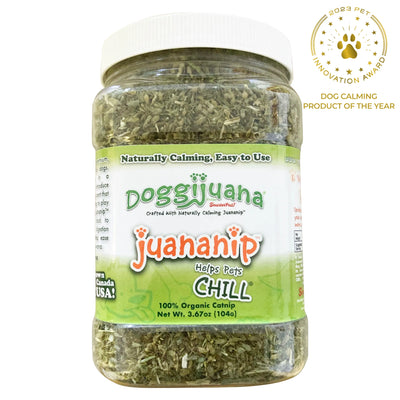
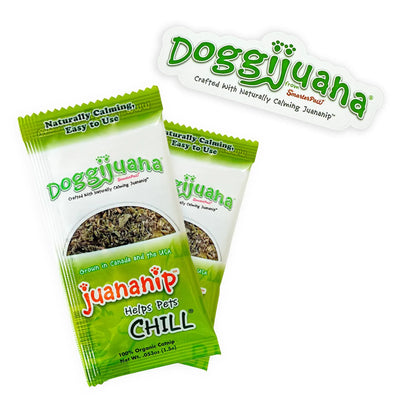
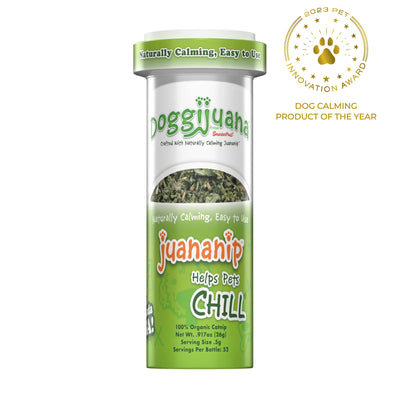
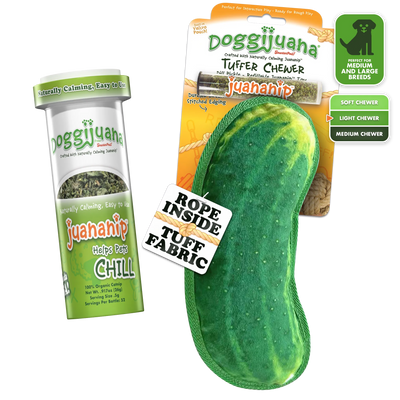
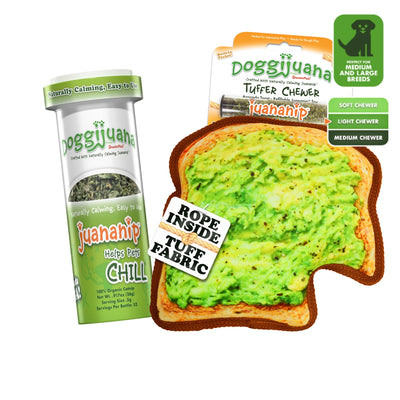
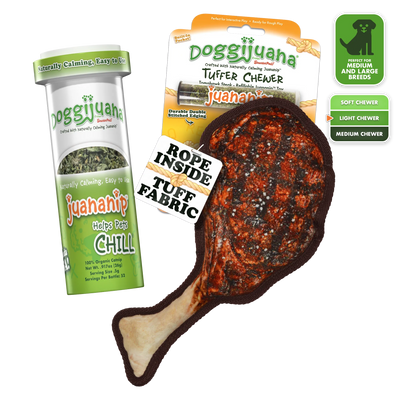
Home scent games need a scent worth hunting, and this is exactly what Juananip is: a matatabi blend formulated for dog receptors, interesting enough to a dog's nose to hold a search together. A pinch inside a room hide gives the dog a distinct, high-interest target odor. The same goes for toys: a Tuffer Chewer with Juananip in the mix turns a chew session into scent-driven play, which is why dogs return to it after plain toys have gone stale.
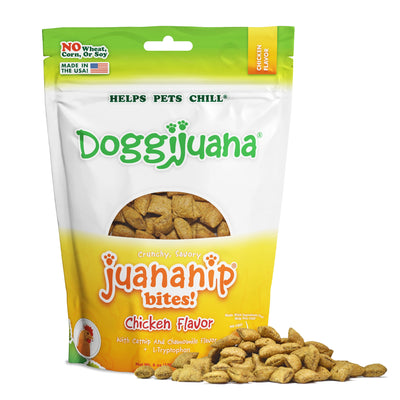
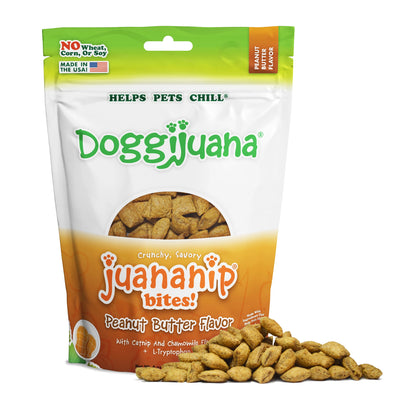
Juananip Bites close the loop as the find reward. A hunt that ends in a reward mirrors the natural search-find-eat sequence, and completing that sequence is a big part of why scent work settles dogs instead of winding them up.
Scent-Driven Play


Building scent into the week
Scent work doesn't replace physical exercise; it covers the half that walks miss. A workable weekly shape: normal walks most days with one or two converted to sniff walks, plus two or three short indoor scent sessions. On the mental side it pairs naturally with puzzle feeding, and our dog puzzle toys guide covers that piece. If your dog shows the restless, destructive signs of an under-worked brain, the mental stimulation guide puts scent work in the full context, and our scent-driven play guide goes deeper on why dog noses respond the way they do.
Start with one sniff walk this week and one five-minute find-it game. The full Juananip lineup covers the scent side of the equation, from the tub for hides to the Bites for the find.


