


Grey cats, gray cats, "blue" cats if you're at a cat show: same cat, and the same reputation everywhere you ask. Mellow. Composed. Affectionate without being needy, playful without being chaotic. It's one of the gentlest stereotypes in the coat-color folklore, and unlike some of the others, the story of where it comes from is less about genetics and more about three very famous grey breeds doing publicity for everyone else.
Where the mellow reputation comes from
Owner surveys tend to describe grey cats as calmer and more even-tempered than average, though the pattern is softer and less consistent than the reputations attached to some other colors. The honest caveat applies here more than anywhere: coat color is a weak predictor of any individual cat's personality. Early socialization, breed lines, and plain individual temperament all matter far more than what color the fur came out.
What makes grey interesting is the mechanism behind the folklore. The gene that makes a cat grey is a dilute gene: it takes black pigment and softens it to blue-grey. As far as anyone has shown, that gene does its work on pigment and stops there. There's no grey equivalent of the white-cat hearing link, no biological pathway from dilute fur to dilute temperament. The reputation needed another source, and it has an obvious one.
The breed halo doing the heavy lifting
Three of the best-known pedigreed cats in the world are grey: the Russian Blue (famously gentle and reserved with strangers), the Chartreux (quiet, watchful, dog-like in its attachments), and the blue British Shorthair (professionally easygoing). Decades of breed guides describing those cats as calm and composed have soaked into the general impression of grey cats, and every grey domestic shorthair inherits the halo without inheriting the pedigree.
That's the fairest reading of the stereotype: it's real as a description of the famous grey breeds, and it's borrowed clothing on everyone else. Your grey cat may absolutely be a composed, dignified couch philosopher. They may also be a tornado in a smoke-colored coat. The coat didn't decide either way.
Playing to a composed player's style
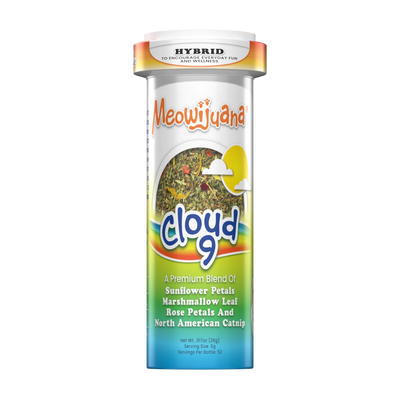
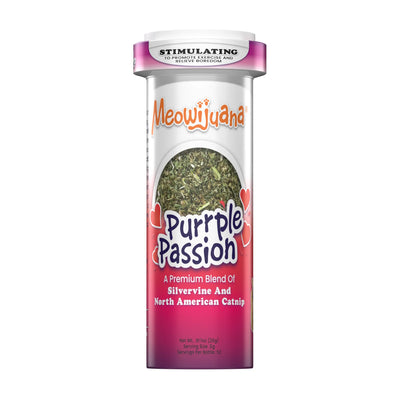
If your grey cat does fit the mellow profile, they're usually what we'd call a composed player: interested in the hunt, unbothered by theatrics, happy with measured sessions that end in a clean catch. Hybrid blends are built for exactly that temperament, engaged but not frantic, and they leave headroom for the days the tornado shows up. If yours turns out to be all rocket and no philosopher, the stimulating lane exists for a reason. Our blend-by-personality guide maps the whole decision from observed temperament rather than fur color, which is the right order to do it in.
For the Composed Players

Is my grey cat secretly a Russian Blue?
Probably not, and it genuinely doesn't matter for their care. Russian Blues are a specific pedigreed breed with vivid green eyes, a dense double coat that feels plush rather than sleek, and paperwork. The overwhelming majority of grey cats are domestic shorthairs who happen to carry the dilute gene, with eye colors across the range of gold, green, and copper. If there's no pedigree in the picture, "grey domestic shorthair" is almost certainly the answer, and it comes with the same capacity for personality as any purebred, minus the invoice.
So is the stereotype true?
Grey cats earn their mellow reputation partly by association: the famous grey breeds really are calm lines, and the folklore generalized from there. For your specific cat, the coat tells you where the folklore starts, not who they are. Watch the actual animal: their play style, their social battery, how they handle a loud Tuesday. The full coat-color personality guide covers what the surveys say about every color, and the white cat edition shows what it looks like when a coat gene really does reach behavior, because grey's cleaner story reads best next to it.
Whoever your grey cat turns out to be, the blend lineup runs the full range from couch philosopher to smoke-colored tornado.


